Understanding the Muscles Worked During a Deadlift
Deadlift 101: A Quick Overview
The deadlift is one of the most effective exercises for building strength and muscle. It targets many major muscle groups at once. Whether you are new to fitness or want to improve, understanding the deadlift is key. In this guide, we will look at what muscles the deadlift works, why it is important, and how to do it safely and effectively.
The Posterior Chain: Primary Movers Explained
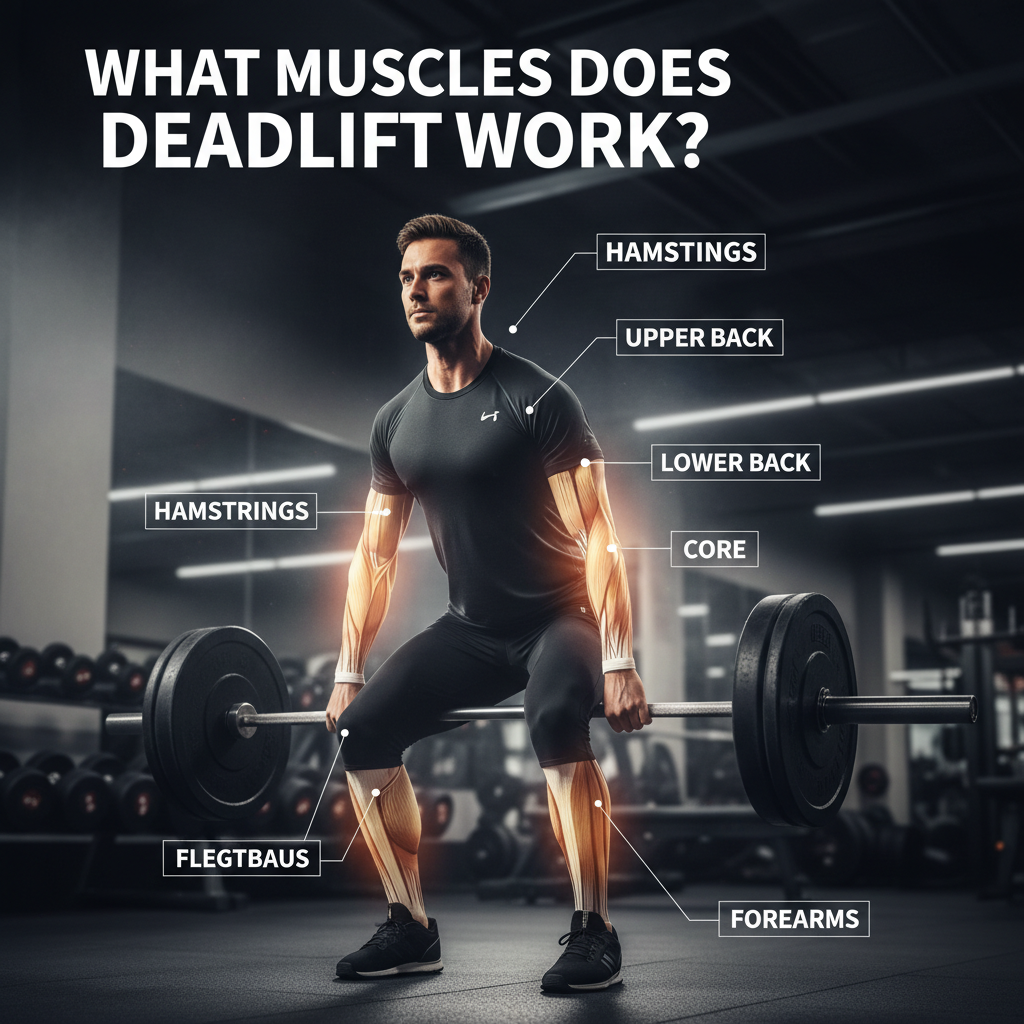
The main muscles used in the deadlift are part of the “posterior chain.” These include:
- Gluteus Maximus (your butt muscles): Main power source in the lift.
- Hamstrings (back of your thighs): Help your body stand straight.
- Erector Spinae (muscles along your spine): Keep your back straight.
These muscles work together to lift the weight and keep your body safe and strong.
Secondary Muscles and Stabilizers
Other important muscles help with deadlifting, too. These include:
- Quadriceps (front of your thighs): Help you push off the ground.
- Adductors (inner thighs): Keep your legs balanced.
- Forearms and Grip: Help hold onto the bar.
- Trapezius and Lats (upper and side back): Help keep your shoulders strong and steady.
Deadlift Muscle Activation: Anatomy and Science (2026)
Latest EMG Findings and What They Mean for You
Recent studies using EMG (Electromyography) show that the deadlift strongly activates the glutes and hamstrings, more than many other exercises. The lower back muscles also work hard, but should not take all the stress. Using good form activates more muscle and lowers injury risk.
How Deadlift Variations Shift Muscle Emphasis
- Sumo Deadlift: Emphasizes inner thighs and slightly less lower back.
- Romanian Deadlift: Focuses more on hamstrings and glutes.
- Trap Bar Deadlift: Balances leg and back use, often easier on the lower back.
Choosing the right variation helps target what you want and fits your body type.
Visual Guide: Muscle Engagement in Different Body Types
People with longer legs may feel deadlifts more in the lower back and hamstrings. Shorter lifters may use more quad strength. Everyone should focus on form to make sure all main muscles work together. Watching videos or asking a coach can help spot what you’re using most.
How to Feel and Target Each Muscle in the Deadlift
Mind-Muscle Connection: Why It Matters
Focusing on feeling the right muscles during the lift helps build them better. Think about pushing with your legs and squeezing your glutes as you stand up. Keeping your chest up and back straight activates your spine muscles and protects your back.
Step-by-Step Cues to Activate Glutes, Hamstrings, and Back
- Set Up: Stand with your feet hip-width apart. The bar should be over your shoelaces.
- Grip: Bend at your hips and knees, grab the bar just outside your knees.
- Back Flat: Keep your back straight, chest up, and eyes forward.
- Lift: Push the ground away with your feet as you stand up.
- Squeeze: As you rise, squeeze your glutes and keep your core tight.
- Lower: Push your hips back to lower the bar, keeping control all the way down.
Troubleshooting: What If You Don’t Feel the Right Muscles?
- If you feel pain in your lower back, check your form and use lighter weights.
- If you do not feel your glutes or hamstrings, slow down the movement and focus on squeezing them at the top.
- For grip problems, try using lighter weights or working on grip strength.
Personalizing Your Deadlift for Your Body and Goals
Adapting Technique for Strength, Hypertrophy, or Athletics
- Strength: Use heavier weights, lower reps (3-6), focus on power and rest longer between sets.
- Muscle Size (Hypertrophy): Use moderate weights, higher reps (8-12), feel the muscle working, and shorten your rest.
- Athletics or Endurance: Lighter weights, more reps (12-20), focus on speed and control.
Modifying Your Setup for Different Body Proportions
- Long legs: Try starting with hips a bit higher, keep bar close to your body.
- Short torso: Focus on keeping your shoulders over the bar and core tight.
- Big feet: Set feet just outside hips for better balance.
Programming Tips: Frequency, Sets, and Recovery
- Deadlift 1-2 times per week is enough for most people.
- Use 3-5 sets per session, depending on your goals.
- Rest 2-3 minutes between sets for strength, 30-90 seconds for muscle size.
- Always give your body enough rest to recover, especially your back and legs.
Common Muscular Imbalances Revealed by the Deadlift—And How to Fix Them
Identifying Weak Links: Simple At-Home Assessments
- Do bodyweight squats and hip bridges. If you struggle, your glutes or hamstrings may be weak.
- If your lower back always feels tired, your core or hip muscles may need strengthening.
Corrective Exercises for Underactive Muscles
- Glute bridges and hip thrusts: Build stronger glutes.
- Hamstring curls (lying or standing): Target weak hamstrings.
- Planks and bird-dogs: Build a safer, stronger core.
When to Seek Professional Help
- Pain that does not go away with lighter weights or rest.
- If you cannot keep your back straight during any part of the lift.
- If you feel sharp or sudden pain, stop and see a doctor or physical therapist.
Integrating the Deadlift Into Athletic Performance and Rehabilitation
Transfer to Sport: Building Power and Injury Resistance
The deadlift improves jumping, running, and almost every other sport by making your whole backside stronger. Athletes use deadlifts to build power, speed, and protect knees and backs from injury.
Deadlift Progressions for Rehab and General Fitness
- Start with kettlebell deadlifts or bodyweight hip hinges for beginners or during rehab.
- Progress to light barbell deadlifts, focusing on form and control.
- Only add more weight as you gain strength and keep proper form.
Deadlift FAQs: Muscle Soreness, Plateaus, and More
- Should I feel sore after deadlifts? Some soreness in the legs and butt is normal, but sharp pain is not.
- Can I deadlift every day? No, your muscles need time to recover. 1-2 times per week is best.
- What if I can’t lift as much as last week? Fatigue or lack of sleep can impact strength. It’s normal, just take it easy and recover.
- Will deadlifts make me bulky? Not unless you eat and train specifically to gain lots of muscle. They mostly make you stronger and improve posture.
References and Further Reading (Updated February 2026)
- American College of Sports Medicine. Strength Training Principles, 2026 Edition.
- Journal of Strength & Conditioning Research, February 2026: Latest EMG Analysis of Deadlifts.
- National Academy of Sports Medicine. Deadlift Guide for Teens.
- CDC Youth Physical Activity Guidelines, 2026.
- Additional resources: Official YouTube tutorials by certified strength coaches; PubMed studies on deadlift muscle activation.