Deadlifts are one of the most popular and effective exercises in strength training. If you’ve ever wondered, “What muscles do deadlifts workout?” this step-by-step guide is for you. Whether you are just starting or want to optimize your performance, understanding which muscles get worked will help you lift safer and smarter.
Quick Overview – Deadlift Muscles Worked at a Glance
Primary Movers: Posterior Chain Powerhouses
- Glutes
- Hamstrings
- Spinal Erectors (Lower Back)
Supporting Muscles: Stability and Balance
- Core (Abs and Obliques)
- Trapezius (Upper Back)
- Lats (Side of Back)
- Forearms & Grip Muscles
- Quadriceps (Front Thighs)
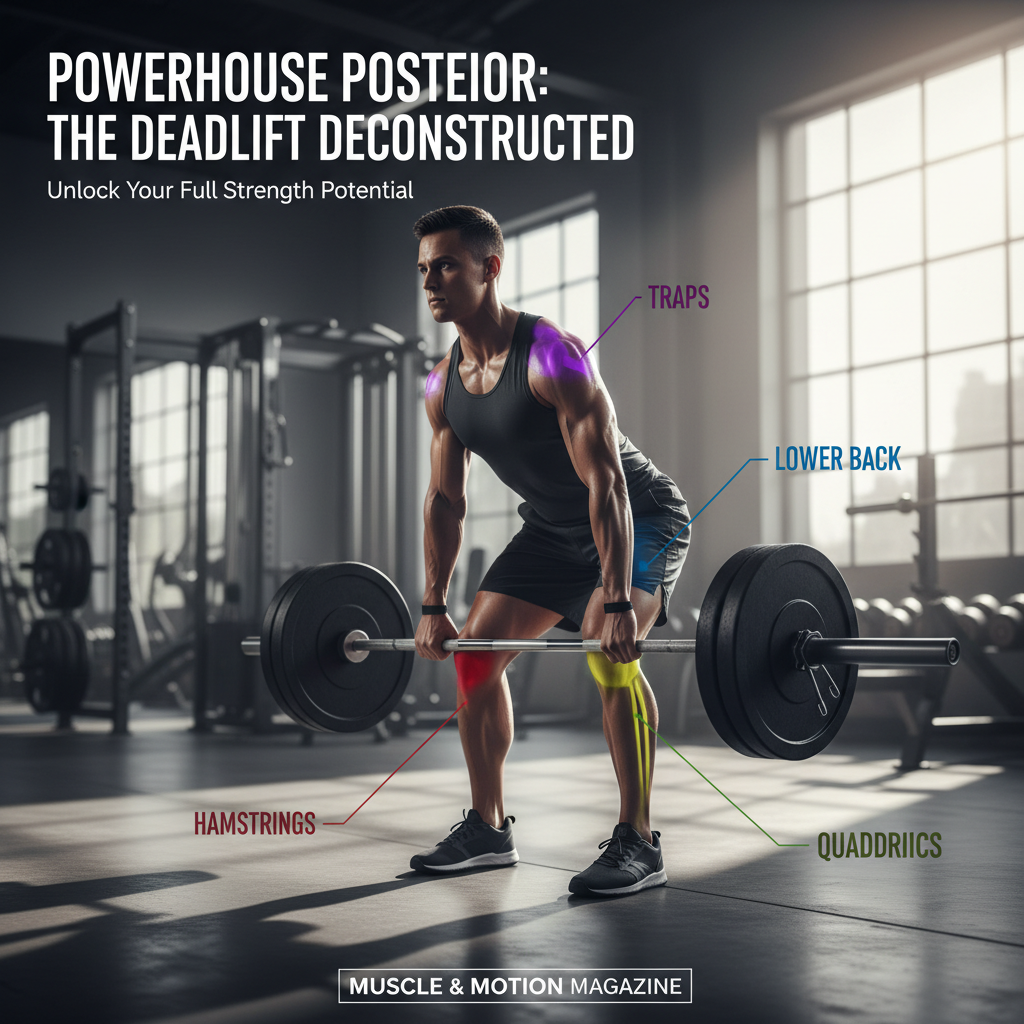
Visual Anatomy Chart: Deadlift Muscle Activation
Imagine standing with a barbell in front of a mirror. When you lift, your glutes and hamstrings power your hips, your back muscles keep your spine straight, your abs lock your body in place, and your grip holds on tight. Even your arms and legs help stabilize the move. Nearly every major muscle group works harder than you think!
Understanding Muscle Activation in Deadlifts
Glutes: The Engine Behind Hip Extension
Your glute muscles (buttocks) are the main drivers when you stand up during a deadlift. They help push your hips forwards, which is called hip extension.
Hamstrings: Driving Force for Lifting Power
The hamstrings, located on the back of your thigh, stretch as you lower the weight and contract as you raise it. They work closely with the glutes for power and stability.
Spinal Erectors & Lower Back: Protecting Your Spine
These muscles run along your spine. They help keep your back straight and strong, stopping it from rounding and protecting it during heavy lifts.
Core and Abs: Bracing for a Solid Lifting Base
Your core (abs and obliques) tightens to support your spine. A strong core prevents injuries and helps transfer power from your legs to your upper body.
Lats, Trapezius, and Grip: Upper Body Support
Your lats (side muscles of your back) and trapezius (upper back) help hold your shoulders in place, while your grip muscles make sure you don’t drop the bar.
Deadlift Variations and Targeted Muscles
Conventional Deadlift: Balanced Lower & Upper Body Engagement
The standard deadlift works the glutes, hamstrings, lower back, core, lats, traps and grip. This variation is perfect for whole-body strength.
Sumo Deadlift: Inner Thighs & Glutes in Focus
In the sumo deadlift, you stand with wide feet and grip the bar inside your knees. This puts extra emphasis on your inner thighs (adductors) and glutes, while lowering strain on your back.
Romanian/Stiff-Leg Deadlift: Isolating the Hamstrings
This variation uses straighter legs. You lower the bar with just a slight knee bend, putting the focus on your hamstrings and glutes with less back involvement.
Trap Bar Deadlift: Quad Activation and Back Relief
Using a trap or hex bar allows you to stand inside the weight. This upright position keeps stress off your back and lets your quadriceps (front of thighs) do more of the work.
Single-Leg and Other Advanced Variations
Single-leg deadlifts challenge your balance and hit stabilizer muscles in your hips, core, and legs. Advanced lifters may also use deficit or snatch-grip deadlifts to target new angles and muscle groups.
How to Maximize Muscle Engagement in Deadlifts
Proper Form Checklist to Hit Every Muscle Group
- Stand with feet hip-width apart. Bar mid-foot.
- Bend at hips and knees, grip the bar just outside knees.
- Set your back flat and brace your core tight.
- Pull your shoulders back and down.
- Push through your heels, driving hips forward as you lift.
- Stand up straight at the top, then return under control.
Common Mistakes That Limit Muscle Activation
- Letting your back round (increases injury risk).
- Pushing with your arms instead of your legs.
- Starting with the bar too far from your shins.
- Not engaging your core before you lift.
- Yanking the bar fast instead of controlled movement.
Cues and Pro Tips for Safe, Effective Lifting
- “Push the floor away with your feet.”
- “Keep your chest up and eyes forward.”
- “Squeeze your glutes at the top.”
- “Brace your core like you’re about to get punched.”
- “Pull the slack out of the bar before lifting.”
Latest Science: What 2026 EMG Studies Reveal About Deadlift Muscle Activation
Posterior Chain vs. Quadriceps: The Real Winners
Recent EMG (electromyography) studies in 2026 confirm the deadlift’s main muscle targets are still the glutes and hamstrings, with some quad engagement depending on stance and bar type. Conventional and Romanian versions activate the whole posterior chain, while the trap bar allows more quad use.
Muscle Recruitment by Deadlift Variation: Evidence-Based Insights
Sumo deadlifts activate inner thighs and glutes more, while stiff-leg hits hamstrings harder. Trap bar shifts some work to the quads, making it ideal for those with back issues.
Deadlifts for Hypertrophy vs. Strength: What Really Works?
For strength, experts suggest low reps with heavy weight. For muscle growth (hypertrophy), add more reps and focus on the squeeze at the peak of each rep. Mixing rep ranges and deadlift variations can help maximize muscle recruitment and gains.
Deadlift Programming By Experience Level
Beginners: Building a Solid Foundation
- Start with light weights and focus on perfect form.
- Practice hip hinge without weight first.
- Train deadlifts 1-2 times per week as part of full-body workouts.
Intermediate Lifters: Progressing Safely for More Muscle
- Increase weight slowly, track your sets and reps.
- Introduce variations like sumo or Romanian deadlifts.
- Pay attention to recovery and don’t skip warm-ups.
Advanced: Maximizing Gains with Variation and Volume
- Use advanced methods like deficit, paused, or single-leg deadlifts.
- Cycle between strength (heavy, low-rep) and hypertrophy phases (moderate, higher-rep).
- Focus on accessory movements to strengthen weak points (such as grip or core).
FAQ: What Muscles Do Deadlifts Workout & More
Can Deadlifts Replace Squats or Other Exercises?
Deadlifts are great, but they don’t fully replace squats or single-joint exercises. Squats target quads more, while deadlifts hit the back and hamstrings. Combine both for best results.
Are Deadlifts Safe for Everyone?
With proper form and smart weight selection, deadlifts are safe for most people. Those with back injuries should consult a doctor or physical therapist before starting.
How Often Should You Deadlift for Best Results?
Most lifters see progress with 1-2 deadlift sessions per week. Beginners may need more rest, while advanced athletes can handle variations more frequently as part of a balanced program.
References & Further Reading (Updated for 2026)
Scholarly Research & Latest Fitness Trends
- 2026 EMG studies on deadlift muscle activation (Journal of Strength and Conditioning Research, 2026).
- Deadlift technique and injury prevention: New England Journal of Sports Science, 2025–2026 issues.
Expert Video Guides and Anatomy Resources
- Barbell Deadlift Step-by-Step (YouTube: Squat University)
- Muscle Anatomy Visualizer (anatomylearning.com, Deadlift section, updated for 2026)
Summary: Key Takeaways and Next Steps
- The deadlift works nearly every muscle, especially your glutes, hamstrings, back, and core.
- Proper form maximizes muscle engagement and keeps you safe.
- Use different deadlift variations to target specific muscles and avoid plateaus.
- Focus on learning technique before lifting heavy weights.
- Update your program as you become more advanced and keep learning from reliable sources.
Ready to get started? Practice the hip hinge, start light, and work your way up. Remember, the real strength lies in doing every rep with good form for the muscles you want to grow!