Understanding Bench Press Muscle Activation
Primary Muscles Worked by the Bench Press
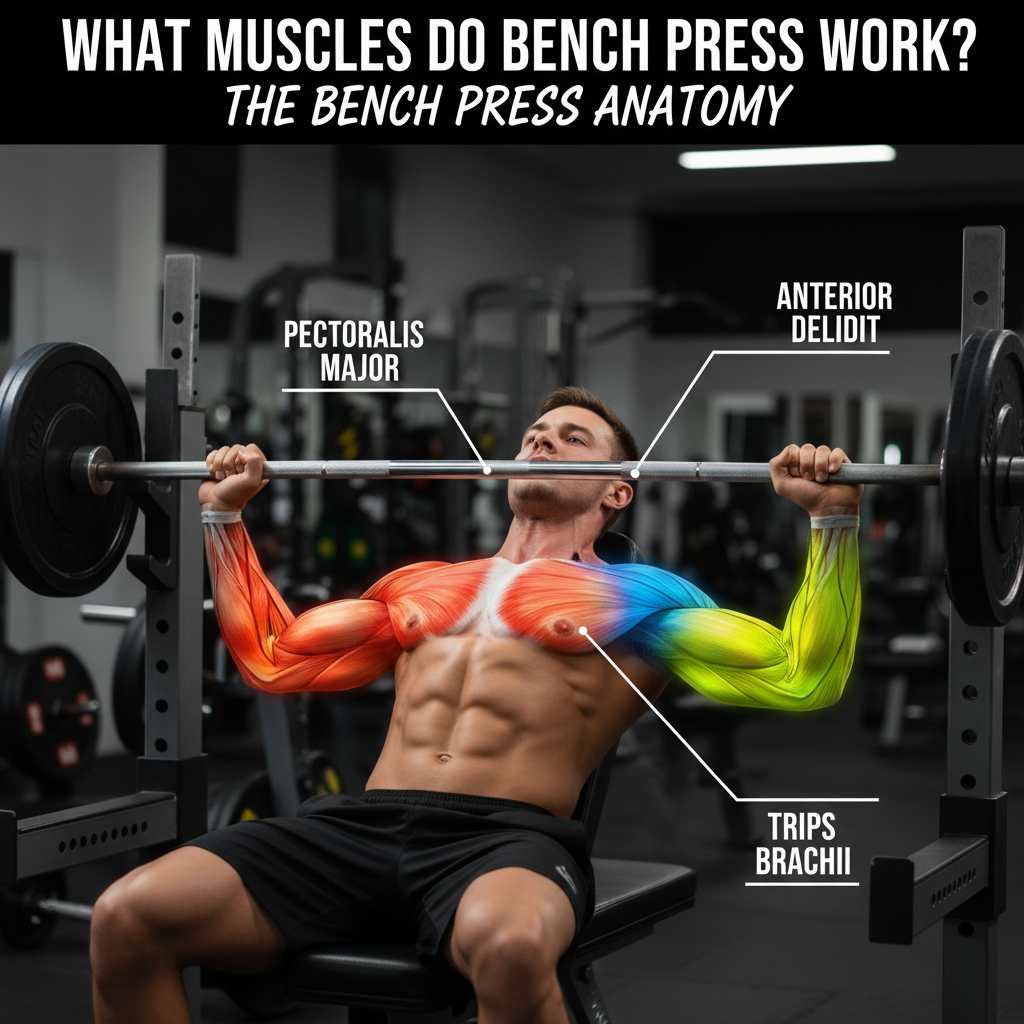
The bench press is a popular exercise for building strength and muscle. The main muscles worked by the bench press are:
- Pectoralis Major (chest muscles) – The largest muscle in your chest and the primary driver of the lift.
- Triceps Brachii (back of arms) – These muscles extend your elbows as you push the bar up.
- Anterior Deltoids (front shoulders) – Help move your arms forward and stabilize the bar.
Secondary and Stabilizer Muscles Engaged
The bench press also works other muscles to support the lift. These include:
- Serratus anterior (side of the rib cage) – Helps with shoulder movement.
- Latissimus dorsi (back) – Supports the upper body and controls the bar path.
- Core muscles – Keep your trunk rigid and protect your spine during the press.
Muscle Activation Differences: Body Types, Experience, and Gender
Everyone’s body is different. Factors like muscle attachments, arm length, and experience level can change which muscles work hardest. Beginners often use more shoulders, while experienced lifters learn to use chest and triceps more. Men and women activate similar muscles, but women may feel more work in their shoulders.
Bench Press Form: How Technique Affects Muscle Emphasis
Standard Bench Press: Execution Step-by-Step
- Set Up: Lie flat on your back on a bench. Your eyes should be under the bar. Place your feet flat on the floor.
- Grip: Hold the bar with both hands, slightly wider than shoulder-width apart.
- Unrack: Lift the bar off the rack, keeping arms straight.
- Lower: Slowly lower the bar to the middle of your chest. Keep your elbows at about a 75-degree angle from your body.
- Press: Push the bar back up until your arms are fully extended.
- Re-Rack: Carefully place the bar back onto the rack.
Hand Grip Width and Angle: Impact on Muscle Recruitment
The width and angle of your hands change which muscles do more work:
- Wide grip: Focuses more on chest muscles.
- Close grip: Shifts work to triceps.
- Neutral (medium) grip: Balances chest and triceps activation.
Bar Path, Elbow Position, and Back Arch: Science-Backed Cues
- Bar path: The bar should move in a slight curve, from over your shoulders down to your chest and back. This protects your shoulders and keeps your power line strong.
- Elbow position: Keep elbows slightly tucked (not flared), protecting your shoulders and boosting chest muscle work.
- Back arch: A small arch in your lower back helps stabilize your body and lets your chest muscles do more work. Your buttocks and shoulders must stay on the bench.
Bench Press Variations and Their Unique Muscle Focus
Incline vs. Decline vs. Flat Bench: Which Muscles Get Priority?
- Incline bench press: Targets upper chest and front shoulders more than the standard flat bench press.
- Decline bench press: Emphasizes the lower chest muscles.
- Flat bench press: Provides balanced work for the entire chest, shoulders, and triceps.
Close Grip vs. Wide Grip: Triceps vs. Chest Activation
- Close grip: Increases triceps muscle work and reduces stress on shoulders.
- Wide grip: Places more stress on the chest, especially the outer portion.
Dumbbell vs. Barbell Bench Press: Unilateral Activation Insights
- Dumbbell bench press: Each side works independently, fixing muscle imbalances and improving stabilization.
- Barbell bench press: Allows you to lift heavier weights and build total strength, but the stronger arm can take over if you are not careful.
Maximizing Hypertrophy and Preventing Injury in Bench Press
Progressive Overload Strategies for Each Muscle Group
- Add small amounts of weight over time to challenge your muscles.
- Increase the total number of sets or reps to boost muscle growth.
- Vary grip width and bench angle to fully stimulate all parts of your chest, shoulders, and arms.
Smart Warm-Ups and Mobility Drills for Safer Pressing
- Start with 5-10 minutes of light cardio, like walking or cycling.
- Use dynamic stretches for your chest, shoulders, and arms (arm circles, push-ups, band pull-aparts).
- Do a few warm-up sets with just the bar or very light weights before your heavy sets.
Common Technique Mistakes That Limit Muscle Growth
- Bouncing the bar off your chest (dangerous and reduces muscle work).
- Letting elbows flare out too much (raises injury risk, uses wrong muscles).
- Not touching the bar to your chest (shortens range of motion, lowers muscle gains).
- Rushing through reps without control (reduces activation, increases injury chances).
Cutting-Edge Tools to Track and Enhance Muscle Engagement (2026)
Using Wearables and Muscle Sensors for Real-Time Activation Feedback
- Wearable devices and EMG muscle sensors can show which muscles are working hardest. This helps fix form and target weak spots.
Apps for Analyzing Bench Press Efficiency and Symmetry
- Modern apps use your phone’s camera to check bar path, speed, and left-right balance. They give instant feedback to improve technique and avoid muscle imbalances.
Leveraging AI to Adjust Technique and Maximize Gains
- New AI-driven coaching systems analyze your lifts in real time. AI can suggest changes to hand placement, grip type, and rep speed for better muscle engagement and result tracking.
Personalized Programming: Tailoring Your Bench Press for Target Muscle Development
Assessing Your Weak Points and Setting Muscle-Specific Goals
- Take videos or use apps to notice which muscles are lagging or if lifts are unbalanced.
- Set simple, specific goals (example: “Increase upper chest size” or “Fix left-right symmetry”).
- Choose bench press variations and accessories that address your weak points.
Programming Sets, Reps, and Intensity for Optimal Activation
- For muscle growth: 3-5 sets of 8-12 reps with moderate to heavy weight.
- For strength: 4-6 sets of 4-6 reps with heavier weights.
- Rest 1-2 minutes between sets for muscle growth; 2-3 minutes for strength.
Accessory Exercises to Balance and Boost Bench Press Muscles
- Push-Ups: Improve chest and triceps endurance.
- Triceps Dips: Strengthen triceps, help boost lockout strength in bench press.
- Dumbbell Flyes: Stretch and activate the chest for better muscle growth.
- Face Pulls: Strengthen upper back and shoulders, support joint health.
Frequently Asked Questions About Bench Press Muscle Activation
- Q1: Why do I feel my shoulders more than my chest?
A: Your elbows are probably flaring out too much. Try tucking them slightly and using a medium grip. - Q2: How can I make my triceps work harder during bench press?
A: Use a close grip bench press. This shifts the work to your triceps. - Q3: Is bench press safe for beginners?
A: Yes, if you start light, use correct form, and have a spotter or safety bars. Focus on technique first. - Q4: My left side feels weaker. What should I do?
A: Use dumbbells to train both arms separately and fix imbalances. - Q5: How often should I bench press?
A: Two to three times a week is best for most people. Allow your muscles at least one day to recover between sessions.
References and Further Scientific Reading (2026 Edition)
- American College of Sports Medicine. (2025). ACSM’s Guidelines for Resistance Training.
- Schoenfeld, B.J. (2024). “The Mechanisms of Muscle Hypertrophy and their Application to Resistance Training,” Journal of Strength and Conditioning Research.
- Contreras, B., & Gentil, P. (2025). “Bench Press Grip Width Revisited: Implications for Muscle Growth,” Sports Science Review.
- Fitness Technology News. (2026). “Best Wearables and AI Tools for Strength Training.”
- National Strength and Conditioning Association. (2025). “Optimizing Bench Press Technique.”