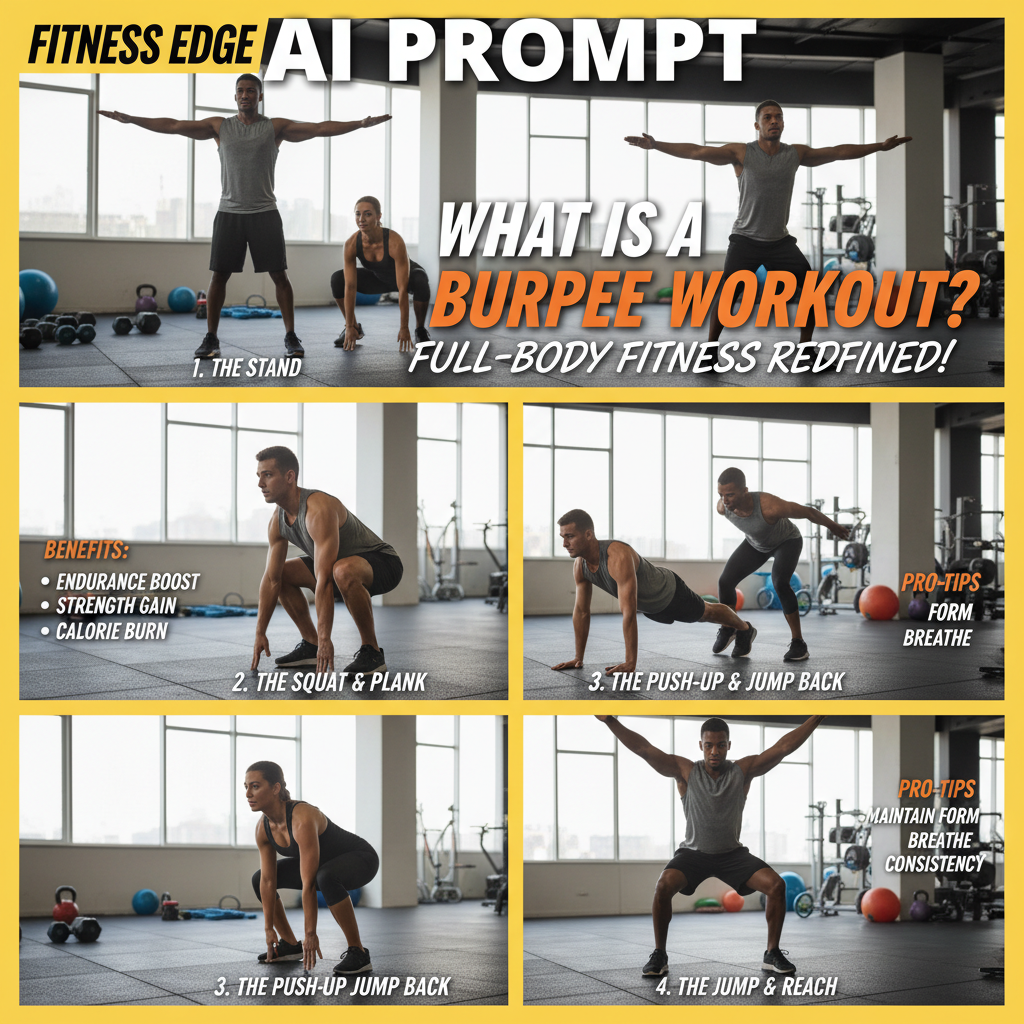
What Is a Burpee Workout? Definition and Origins
The Evolution of Burpees in Modern Fitness
A burpee workout is a full-body exercise that combines a squat, a push-up, and a jump into one fluid movement. Originally developed in the 1930s by physiologist Royal H. Burpee as a fitness test, the burpee has since become popular in sports, military training, and fitness classes. Today, burpees are a staple in high-intensity workouts for their simplicity and effectiveness.
Anatomy of a Burpee: Key Movements Explained
A basic burpee includes four main steps: squatting down, kicking your feet back, performing a push-up, and jumping up. Each part of the move helps work different muscles and improves coordination.
Why Burpee Workouts Are So Effective
Muscles Worked During a Burpee
Burpees engage several muscle groups at once, including:
- Chest
- Shoulders
- Arms (Triceps and Biceps)
- Core (Abs and Lower Back)
- Glutes
- Quadriceps
- Hamstrings
- Calves
Key Benefits: Strength, Endurance, and Fat Loss
Burpee workouts help increase strength, build endurance, and support fat loss. Because they are high-intensity, burpees raise your heart rate quickly, leading to improved cardiovascular health and more calories burned.
Science Spotlight: Calories Burned and Cardiovascular Impact
Studies show that burpees can burn up to 10-15 calories per minute. They are a form of cardio-resistance exercise, meaning you work your muscles and your heart at the same time for a double benefit.
How to Perform a Burpee: Step-by-Step Technique
Classic Burpee: Detailed Instructions with Tips
- Stand with feet shoulder-width apart and arms by your side.
- Lower into a squat, placing your hands flat on the floor in front of you.
- Kick your feet back behind you so you’re in a plank position.
- Do one push-up, keeping your body straight.
- Jump your feet forward to return to the squat position.
- Explosively jump into the air, reaching your arms overhead.
- Land softly and immediately go into the next repetition.
Tips: Keep your core tight, land softly, and move at your own pace. Quality is more important than speed.
Common Mistakes and How to Fix Them
- Rushing: Slow down and focus on form.
- Sagging hips: Keep your core engaged during the plank and push-up.
- Incomplete squat or jump: Make sure you fully squat and jump each time.
Injury Prevention and Mobility Considerations
- Warm up before doing burpees to reduce injury risk.
- If you have knee or wrist pain, modify the movement or do a simpler version.
- Stretch hips and shoulders to improve mobility for burpees.
Burpee Workout Variations for Every Level
Beginner Modifications: Low-Impact and Scaled Versions
- Step back instead of jumping for less impact.
- Skip the push-up if new to burpees.
- Do the movement against a wall or onto a box for support.
Intermediate Twists: Push-Ups, Tuck Jumps, and More
- Add a regular push-up for greater strength work.
- Add a tuck jump as you jump up for more intensity.
- Burpee with a lateral jump after standing up.
Advanced Burpees: Navy Seal, Dumbbell, and Beyond
- Navy Seal burpee: Add multiple push-ups between plank and squat.
- Dumbbell burpee: Hold light dumbbells for extra resistance.
- Burpee pull-up: Add a jump to a pull-up bar after the squat jump.
Burpee Alternatives for Joint Sensitivity
- Squat to overhead reach (no jumping or push-up).
- Plank walk-outs from standing without the squat jump.
- Mountain climbers or step jacks as lower-impact options.
Integrating Burpees Into Your Fitness Routine
Sample Burpee Workouts: AMRAP, EMOM, Tabata, and Circuits
| Workout Style | Description |
|---|---|
| AMRAP | As Many Rounds As Possible in 10 minutes. Do 10 burpees, rest 30 seconds, repeat. |
| EMOM | Every Minute On the Minute: Do 5 burpees at the start of every minute for 8 minutes. |
| Tabata | 20 seconds burpees, 10 seconds rest, repeat for 4-8 rounds. |
| Circuit | Combine burpees with squats, push-ups, and lunges for a full workout. |
Weekly Programming: Progression and Recovery Tips
- Start with 2-3 burpee sessions per week.
- Add 1-2 reps per session as you improve.
- Take at least one rest day between sessions.
- Listen to your body and stay hydrated.
Nutrition Tips to Maximize Results
- Eat a balanced diet with protein, carbs, and healthy fats.
- Stay hydrated before and after your workout.
- Consider a light snack (fruit or yogurt) 30 minutes before exercising.
Special Populations and Burpees
Are Burpees Safe for Beginners, Older Adults, or People with Injuries?
- Beginners: Start slower, use modifications, and focus on form.
- Older adults: Try low-impact or supported variations.
- People with injuries: Check with a doctor or coach before starting. Always use pain as a guide.
Gender, Age, and Fitness Considerations
- Burpees work for all genders and most ages, but adjust speed and reps as needed.
- Younger athletes can progress to higher reps sooner. Older adults should focus on joint safety and stability.
Burpees for Weight Loss vs. Muscle Gain
- For weight loss, use burpees in circuits or HIIT workouts with less rest between sets.
- For muscle gain, focus on explosive power and add resistance like dumbbells or vests.
Burpee Workout FAQs and Myths Debunked
How Many Burpees Should You Do a Day?
This depends on your fitness level and goals. Beginners can start with 3 sets of 5 to 10 burpees, while advanced athletes can aim for 50 or more. It’s better to focus on quality and increase reps as you build strength.
Are Burpees Bad for Your Knees or Back?
If done with good technique, burpees are safe. If you have knee or back pain, use modifications or skip the jump and push-up.
Do Burpees Really Build Muscle or Just Burn Fat?
Burpees do both. They are excellent for burning fat due to their cardio effect, but also build strength in your arms, chest, core, and legs.
Next Steps: Tracking Progress and Staying Motivated
How to Measure Your Burpee Fitness Level
- Track how many burpees you can do in one minute.
- Write down your time to complete 50 burpees and aim to improve.
- Video yourself to check your form and progress.
Setting Realistic Goals and Avoiding Burnout
- Set short-term goals (e.g., “10 more reps in two weeks”).
- Mix burpees with other exercises to stay motivated.
- Take regular rest days and celebrate small victories.
Apps and Tools for Burpee Workouts in 2026
- Use fitness apps to track rounds and rest intervals.
- Wearable devices can count reps and heart rate.
- Video tutorials and online communities offer guidance and support.