Understanding the Deadlift: Fundamentals and Biomechanics
What Does Deadlift Work? The Primary Muscle Groups Explained
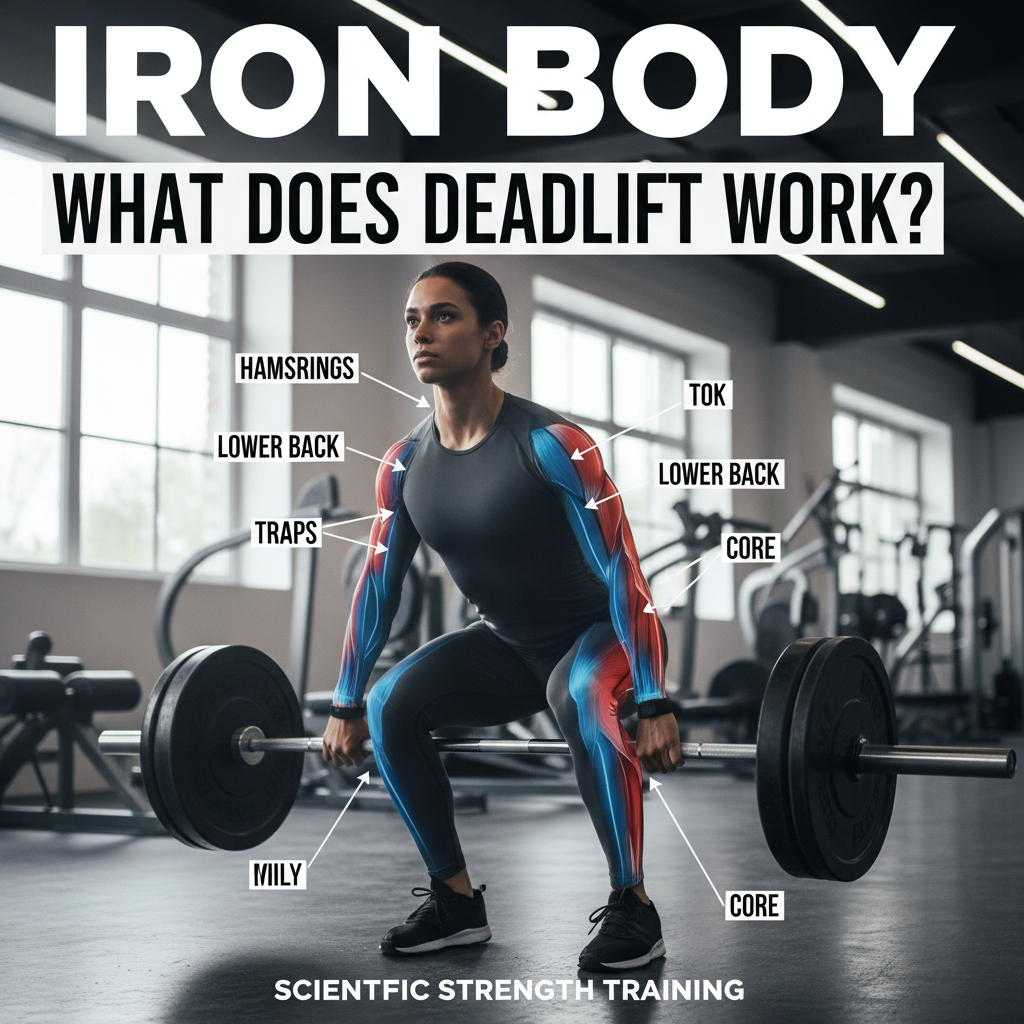
When someone asks, “What does deadlift work?”, the simple answer is: deadlifts work your legs, back, and core. The deadlift is a compound movement. This means it uses many muscle groups together. The main muscles deadlifts work are the glutes (your butt), hamstrings (back of the legs), and lower back. These big muscles help you stand up tall. They are very important in helping you move and lift things all day.
Secondary Muscles Activated During a Deadlift
But what does deadlift work beyond those main muscles? Deadlifts also activate secondary muscles: your quadriceps (front of your thighs), forearms (from holding the bar), traps (upper back), and abdominals (your core and stomach area). These muscles help you balance, grip, and control the weight safely. That’s why deadlifts work so much of your body in one simple movement.
The Biomechanics of a Proper Deadlift
Understanding what does deadlift work means learning the biomechanics, or how your body moves during the lift. When you set up, you hinge at the hips, keeping your spine neutral (straight, not rounded). As you lift, your knees and hips straighten together, while your back stays safe and strong. Using proper form helps make sure deadlifts work the right muscles and prevent injury.
Step-by-Step: How the Deadlift Trains Each Muscle Group
The Setup Phase: Engaging Legs, Core, and Back
- Start with your feet hip-width apart, toes under the barbell.
- Bend your knees and grip the bar with overhand or mixed grip.
- Puff your chest out and pull your shoulder blades back, making your back flat.
- Tighten your core like you are about to get punched in the stomach.
During this phase, deadlifts work your leg muscles as you prepare to push off the ground, your back as you keep it flat, and your core for stability.
The Lift-Off: Muscle Activation from Floor to Knees
- Push through your heels and straighten your knees and hips at the same time.
- Keep the bar close to your body as it rises.
Here, what does deadlift work? It works your quads first as you leave the floor. As you pass your knees, your hamstrings and glutes take over, while your back muscles keep your spine safe.
The Lockout: Glutes, Hamstrings, and Core at Work
- Once the bar passes your knees, thrust your hips forward to stand tall.
- Squeeze your glutes at the top and stand with shoulders back.
At lockout, deadlifts work your glutes, hamstrings, and core the most. This phase helps you get stronger for jumping, running, and almost every sport.
Common Deadlift Mistakes and How They Affect Muscle Engagement
Poor Form and Missed Muscle Activation
If your form is off, deadlifts work the wrong muscles or not enough muscles. For example, rounding your back puts strain on the spine instead of working your core and back muscles. If you let your knees cave in or your hips shoot up first, your legs miss out on the work.
How to Correct Form for Maximum Muscle Recruitment
- Keep your chest high and lower back neutral the whole time.
- Grip the bar tightly to wake up your forearms and traps.
- Push through your whole foot instead of just your toes or heels.
Deadlifts work best when you use perfect form. This way, you get the benefits for all the target muscles and avoid injuries.
Injury Prevention Through Proper Technique
A well-executed deadlift keeps your back safe and makes sure deadlifts work your muscles, not your joints. Warm up, start light, and never rush your setup. Good form is more important than heavy weights.
Deadlift Variations: What Does Each Version Work?
Conventional Deadlift vs. Sumo Deadlift: Key Muscle Focus Differences
| Type | What Does Deadlift Work? |
|---|---|
| Conventional | Works lower back, glutes, hamstrings, some quads. |
| Sumo | Focuses more on inner thighs (adductors), quads, less lower back. |
Both variations answer the question, “What does deadlift work?” but in slightly different ways. Try both to see which works your muscles more effectively for your needs.
Romanian Deadlift: Emphasizing the Posterior Chain
The Romanian deadlift is a top choice if you want deadlifts to work mostly your hamstrings, glutes, and lower back. Unlike the regular deadlift, your knees stay a bit bent, and you feel a deep stretch in your hamstrings at the bottom of the move. This exercise is best for building a strong back side (posterior chain).
Trap Bar Deadlift: Unique Muscle Engagement Patterns
The trap bar deadlift uses a hexagonal-shaped bar. It puts less stress on your lower back and lets you stand more upright. What does deadlift work with this bar? It balances the work between your quads, glutes, back, and forearms. It’s safer for beginners and great for athletes.
Programming Deadlifts: Maximize Strength, Muscle Building, or Endurance
How Often to Deadlift and for Whom
- For beginners: Once per week is enough to start.
- For intermediates: Two times per week works well.
- For advanced lifters: Up to three times per week, depending on your goal.
Ask yourself what does deadlift work for your body and your schedule. Rest is also important for muscle growth and recovery.
Sets, Reps, and Rest Periods by Training Goal
| Goal | Sets & Reps | Rest Period |
|---|---|---|
| Strength | 3-6 sets of 3-6 reps | 2-4 minutes |
| Muscle Building | 3-5 sets of 6-10 reps | 1-2 minutes |
| Endurance | 2-4 sets of 12-20 reps | 45-60 seconds |
Match your training to what does deadlift work best for your fitness goals.
Adapting Deadlifts for Beginners, Intermediates, and Advanced Lifters
- Beginners: Start with a light bar or even a broomstick to learn form. Focus on how deadlifts work your legs and back together.
- Intermediates: Add more weight slowly. Try different variations. Notice how changing stance or grip alters what deadlifts work.
- Advanced: Use heavy weight with perfect form. Try speed deadlifts, chains, or bands for extra challenge. Track which muscles feel most worked.
Frequently Asked Questions: What Does Deadlift Work and How to Use Them for Your Goals
- Q: What does deadlift work better—legs or back?
A: Both! Deadlifts work your back and legs at the same time, but you can shift focus with different variations. - Q: Can anyone do deadlifts?
A: Yes, with proper form and weight. Beginners should start light. - Q: Why do I feel deadlifts work my grip the most?
A: Your forearms work hard to hold the bar, but your legs and back are still engaged. Strengthen your grip over time. - Q: Are deadlifts safe?
A: Yes, if you use good technique. Never rush or lift too heavy too soon.
Remember, always ask “What does deadlift work for me?” and focus on your own progress.
Further Resources and Expert Tips for Deadlift Success in 2026
- Use reputable fitness videos and instruction to check your form.
- Partner with a coach when first starting to learn what deadlifts work and avoid mistakes.
- Track your progress by writing down your sets, reps, and how each muscle feels.
- Mix up your exercises to keep challenging what deadlift works for your body each week.
- Watch for soreness and fatigue—rest days are when muscles actually grow.
Summary: Key Points and Next Steps
- What does deadlift work? Nearly your whole body—with the main focus on glutes, hamstrings, and back.
- Practice proper form to get the most out of every deadlift.
- Try different deadlift variations to see what muscles they work best for you.
- Adjust frequency and sets for your fitness level—beginners start slow, advanced lifters can train more often.
- Stay safe by avoiding common mistakes and listening to your body.
Start today by learning what does deadlift work for your own body and fitness goals. As you improve, deadlifts will help you get stronger, move better, and feel amazing!