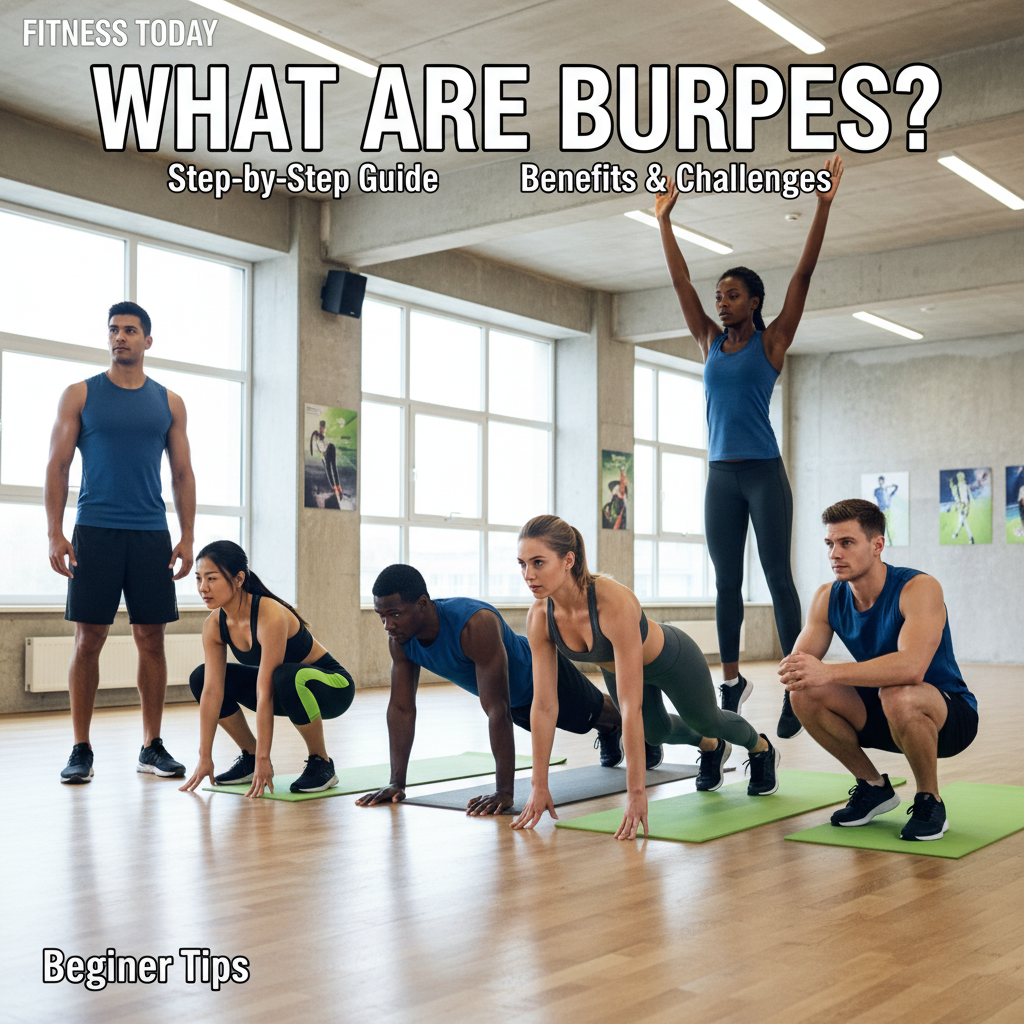
Understanding Burpees: Definition and Origin
What Are Burpees? A Full-Body Exercise Explained
Burpees are a full-body exercise used widely for building strength and endurance. This movement combines a squat, plank, and jump into one sequence. Burpees engage several major muscle groups, making them ideal for cardio and functional fitness. They do not require any equipment, so you can do burpees almost anywhere. In 2026, burpees remain popular in workouts for students and athletes of all levels.
The History and Evolution of Burpees in Modern Fitness
The burpee was invented by physiologist Royal H. Burpee in 1939. Originally, it served as a fitness test to check agility and coordination. Over decades, burpees evolved. They became part of military training, group fitness classes, and HIIT workouts. Advanced technology such as AI coaching and wearables now help track performance and improve technique, keeping burpees modern and effective for 2026.
The Science of Burpees: Muscles Worked and Health Benefits
Major Muscle Groups Activated by Burpees
- Quads, hamstrings, and glutes (legs and hips)
- Core muscles (abs and lower back)
- Chest, shoulders, and triceps (upper body)
- Calves (lower legs)
Each transition in a burpee—from squat to plank to jump—uses different muscles. This makes burpees an efficient full-body movement to add to any workout.
Top Benefits of Burpees for Cardiovascular Fitness and Fat Loss
- Improves heart and lung health through aerobic training
- Burns calories quickly, aiding fat loss
- Builds muscle endurance and explosive power
- Boosts metabolism for hours after exercise
- Enhances coordination and functional strength
With regular practice, burpees help students increase fitness and maintain healthy body weight.
Burpees in HIIT and Functional Movement Training (2026 Perspective)
In 2026, burpees are central in HIIT (High-Intensity Interval Training) and functional fitness. Many AI fitness apps now create AI-customized burpee intervals for personal goals. Wearable devices track reps, heart rate, and form, allowing real-time feedback and progress tracking.
Step-by-Step Guide: How to Do a Proper Burpee
Standard Burpee: Detailed Step-by-Step Instructions
- Stand with feet shoulder-width apart. Arms relaxed at your sides.
- Lower into a squat, placing your hands flat on the floor in front of you.
- Jump or step both feet back, landing in a plank position. Keep your core tight.
- Do one push-up (optional for beginners).
- Jump or step your feet forward to return to the squat position.
- Explosively jump straight up, reaching both arms overhead.
- Land softly and immediately start the next rep.
Repeat for the desired number of repetitions. Remember, quality is more important than speed.
Common Form Mistakes and How to Avoid Injury
- Bending your back: Keep your spine neutral during the jump and plank.
- Letting knees cave in: Point knees in the same direction as your toes.
- Slamming onto the floor: Land softly to absorb impact.
- Skipping warm-up: Do 3–5 minutes of light cardio before starting.
- Ignoring fatigue: Rest as needed to prevent poor form and possible injury.
Video and Wearable Tech Integration for Real-Time Feedback
In 2026, digital fitness platforms let you mirror proper burpee form on video. Many wearables and fitness apps use AI to give real-time posture correction, rep counting, and pace suggestions. These tools help students learn and stay safe.
2026 Variations: Modern Burpees for Every Fitness Level
Beginner-Friendly Modifications (No Jump, No Pushup)
- Step back instead of jumping to the plank.
- Skip the push-up during the plank phase.
- Perform a calf raise instead of a high jump at the end.
- Practice slowly to master good form before increasing intensity.
Advanced Burpee Variations (AI-Guided, Wearable Tracked, Equipment-Assisted)
- Burpee to pull-up: Jump up and grab a pull-up bar.
- Weighted burpee: Hold light dumbbells or wear a weighted vest.
- AI-guided challenge: Use apps that create new variations and track your unique tempo.
- Bosu burpee: Land on an unstable surface for more core engagement.
Mobility and Joint-Friendly Burpees: Sustainable Training
- Slow burpees: Move at a controlled pace to reduce impact.
- Platform burpees: Use a low step to limit deep squatting.
- Partial burpees: Avoid jumping or drop the push-up for less joint strain.
- Wear supportive shoes and focus on landing softly to protect ankles and knees.
How to Incorporate Burpees Into Your Workouts
Sample AI-Curated Burpee Workouts for Different Goals
- Fat loss: 30 seconds of burpees, 30 seconds rest, repeat 5–10 times.
- Endurance: Complete as many burpees as possible in 5 minutes, track improvement weekly using a fitness app.
- Strength & Power: Start with 5 reps, rest, add one rep each round, use dumbbells or vest as you progress.
- School fitness challenge: Compete with friends using wearable-tracked scores and leaderboards.
Using Digital Tools to Track Progress and Recovery
- Wearables count reps, monitor heart rate, and log performance daily.
- AI fitness apps provide feedback on recovery needs and prevent overtraining.
- Smart reminders encourage regular, safe practice, helping students stay consistent and motivated.
Integrating Burpees with Other Functional Movements
- Add burpees between circuit exercises: jumping jacks, lunges, or planks.
- Combine with sprints for speed and endurance sessions.
- Mix burpees into team sports-themed drills, such as football or basketball warm-ups.
Expert Tips, Myths, and Current Trends for Burpees in 2026
Trainer-Recommended Burpee Protocols
- Warm up before starting any high-intensity burpee set.
- Keep your movements controlled and steady, even when tired.
- Focus on form over speed—one perfect rep is better than three rushed reps.
- Use AI feedback tools to get the most from your workout.
Common Burpee Myths Debunked with Latest Research
- Myth: Burpees damage your joints. Fact: With proper form and progressions, burpees are safe and joint-friendly for most students.
- Myth: Burpees are only for athletes. Fact: Anyone, including beginners, can find a version that suits their level.
- Myth: More burpees always mean better results. Fact: Quality and consistency matter most for fitness gains.
Wearable Devices, AI Fitness Apps, and the Future of Burpees
By 2026, wearable devices and AI fitness trainers are essential for modern exercise. Students can analyze their movements, get custom advice, and safely challenge themselves with interactive burpee routines. The future promises more personalization, smarter recovery tracking, and new fun ways to improve with burpees.
FAQ: Everything You Need to Know About Burpees Today
Are Burpees Safe for Everyone?
Most people can perform burpees safely with the right modifications. Beginners, people with joint pain, or existing injuries should start slowly and talk to a doctor or trainer if unsure.
How Many Burpees Should You Do Per Day?
For grade 9 students, start with 5–10 burpees per session, gradually increasing as you get stronger. Listen to your body and stop if you feel any pain. Advanced learners may do 30–50 reps in a workout, but only with perfect form.
Best Alternatives and When to Avoid Burpees
- If you have knee or wrist pain, try mountain climbers, jumping jacks, or squat jumps instead.
- Always avoid burpees during injuries or if your doctor advises it. Modify as needed for your comfort and safety.
References and Further Reading on Burpees for 2026
- Royal H. Burpee’s original fitness test studies
- American College of Sports Medicine: Youth Exercise Guidelines
- HIIT and Functional Training in Education, 2025 Edition
- Wearable Devices in School PE: Current Research and Practices
- AI-Driven Personal Training: Future Trends, Fitness Journal, 2026