Why Strength Training Matters for Runners in 2026
Updated Benefits: Endurance, Injury Prevention, and Speed
Strength training is a key factor for runners who want to improve endurance, prevent injuries, and run faster. Building stronger muscles supports your joints and helps you run with better form. This means you can run longer, stay healthy, and recover quicker after workouts or races.
What’s New: Scientific Advances and Technology Integration
In 2026, new research has shown that runners benefit even more from targeted strength training. Technology, such as wearables and smart apps, can now track your strength and running progress. This makes it easier to build a balanced schedule that fits your needs.
Assessing Your Runner Profile for a Personalized Strength Training Schedule
Interactive Self-Assessment: Mileage, Goals, and Limitations
To get the best results, you should know your current running level. Ask yourself these questions:
- How many kilometers do I run per week?
- What are my main goals? (speed, stamina, fun, races)
- Do I have any injuries or health issues?
Write down your answers. You will use this information to choose your strength plan.
Tailoring Schedules for Beginners, Elites, Trail, and Road Runners
If you’re new to running, you should start slow. Elite runners will need more advanced moves and heavier weights. Trail runners focus more on balance and ankle strength. Road runners look for power and stride efficiency. Choose exercises and training days that match your type.
Building Your Year-Round Strength Training Schedule for Runners
52-Week Periodized Strength Plan: Phases and Progression
Strength training for runners works best in phases. A simple yearly plan includes:
- Base Phase (Weeks 1-12): Focus on basic strength, higher reps, low to moderate weight.
- Build Phase (Weeks 13-36): Increase weight, reduce reps, add power moves.
- Peak/Race Phase (Weeks 37-44): Lower weight, explosive movements, more running focus.
- Off-Season/Deload (Weeks 45-52): Lower intensity, maintain movement, recover fully.
Adapting Your Schedule for Race Season, Off-Season, and Deload Weeks
Adjust your strength training intensity around big races or heavy running seasons. During a race week, cut back strength workouts to short, easy sessions. Use the off-season to focus more on lifting and correcting weaknesses.
Essential Strength Training Exercises for Runners
Core Movements: Squats, Deadlifts, Lunges, and More
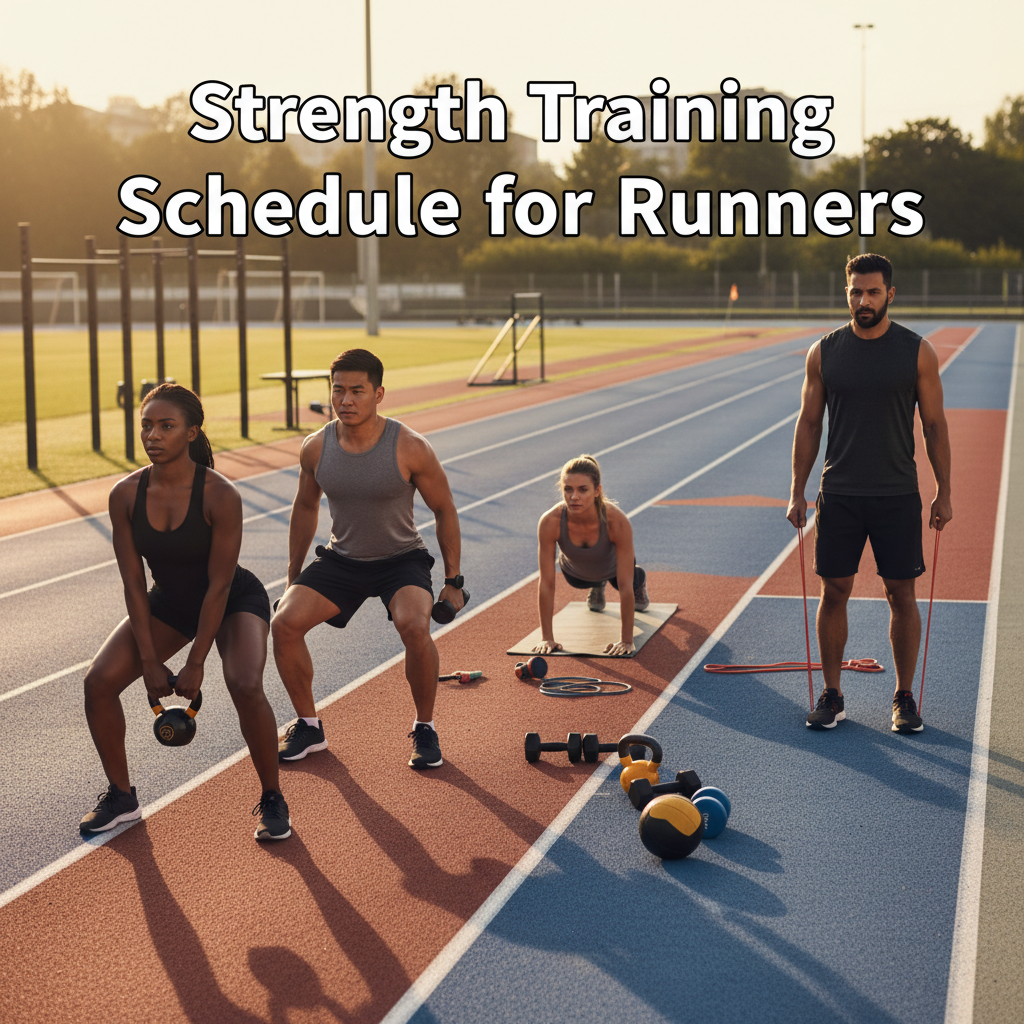
- Squats: Builds hip, glute, and leg strength for running.
- Deadlifts: Trains your hamstrings and lower back for better posture.
- Lunges: Works balance and single-leg stability.
- Step-Ups: Mimics uphill running and improves knee drive.
- Planks: Strengthens your core for better running form.
2026 Updates: Biomechanically-Validated Runner-Specific Exercises
Research recommends these new moves:
- Single-Leg Romanian Deadlift: Improves hip balance and injury resistance.
- Band-Resisted Hip Drives: Mimics sprint mechanics and improves power.
Unilateral Training and Imbalance Correction
Runners often have side-to-side muscle imbalances. Use single-leg exercises like single-leg squats or lateral lunges each week to keep your body balanced.
Weekly Strength Training Templates: Blending Running and Lifting
Example Hybrid Training Weeks for Common Goals (Speed, Endurance, Injury Prevention)
| Day | Goal: Speed | Goal: Endurance | Goal: Injury Prevention |
|---|---|---|---|
| Monday | Short Run + Power Lifting | Medium Run + Strength | Easy Run + Rehab Strength |
| Wednesday | Interval Run + Light Strength | Long Run | Short Run + Core Stability |
| Friday | Rest | Rest or Yoga | Rest or Stretching |
| Saturday | Speed Run + Full Body Strength | Hill Run + Leg Strength | Moderate Run + Mobility Work |
How to Integrate Strength Workouts with Your Cardio Sessions
Do your main strength workouts on easy run or rest days. This helps your muscles recover and keeps you fresh for hard runs. Listen to your body—avoid back-to-back high-intensity days.
Leveraging Wearables, Apps, and AI for Smarter Strength Training
Syncing with Garmin, Strava, and Popular Training Platforms
Modern wearables let you track both runs and strength sessions. Connect your watch to apps like Garmin or Strava to see your total weekly load, recovery, and trends. This can help you make smarter training choices.
Adaptive Recommendations Based on Recovery and Sleep Data
Some apps now use your sleep and recovery scores to change your strength workouts. If you’re tired, the app might suggest a lighter day or rest. This keeps you progressing without overtraining.
Virtual/Augmented Solutions for Home Strength Training
Virtual reality (VR) and augmented reality (AR) coaches can guide your form at home. Use your phone or a headset to follow along and get real-time feedback.
Nutrition, Recovery, and Metrics to Maximize Strength Gains
Science-Backed Recovery Strategies for Runners Who Lift
- Sleep at least 8 hours to boost muscle repairs.
- Do light stretching and foam rolling after workouts to reduce soreness.
- Plan easy run or swim days after hard strength sessions.
Nutrition Guidelines for Performance and Muscle Growth
- Eat balanced meals with protein, carbohydrates, and healthy fats.
- Have a snack with protein and carbs within 30 minutes post-workout.
- Stay hydrated before, during, and after exercise.
Tracking Progress: PR Logs, Performance Metrics, and ROI Estimates
- Keep a log of your workouts, weights, and run times.
- Use your wearable to set and review Personal Records (PRs).
- Check how strength work improves your running pace and how you feel each week.
Advanced Strength Training Schedules for Ultra, Trail, and Masters Runners
Tailoring for Ultra and Trail Runners: Unique Muscular Demands
- Focus on long duration, low-weight moves (step-ups, calf raises).
- Practice balance and ankle drills for uneven surfaces.
Inclusive Scheduling: Female, Masters, and Postpartum Runner Considerations
- Women and older runners should focus on bone health (weight-bearing strength exercises).
- Recent mothers can start with safe moves (bodyweight, core) and add more only when cleared by a doctor.
No-Equipment and Sustainability-Focused Schedules
- Use bodyweight workouts (push-ups, squats, glute bridges).
- Try resistance bands or household items if you don’t have weights.
- Stay consistent and track results for long-term gains.
Frequently Asked Questions: Strength Training Schedule for Runners
- How many times per week should runners strength train? Most runners benefit from 2-3 strength sessions per week.
- Can I lift and run on the same day? Yes, but separate hard lifting and hard running. Pair easy running with lifting when possible.
- What if I miss a session? Skip to the next planned workout. Don’t try to double up sessions in one day.
- Will lifting weights make me too bulky for running? No, if you stick with moderate reps and weights. Strength makes you faster, not bigger.
Downloadable Resources and Tools for 2026 Strength Planning
- Year-round strength training template PDF
- Printable self-assessment worksheet
- Links to tracking and planning apps
- Example no-equipment workout plans for home and travel
Summary: Key Takeaways and Next Steps
- Assess your running level to build a personalized strength training schedule for runners.
- Include key movements—squats, lunges, deadlifts, and core.
- Blend strength training with your running each week for best results.
- Use modern tools and tech for tracking, recovery, and scheduling.
- Eat well, rest, and track your progress. Adjust your plan for race season, off-season, and personal needs.
- Consistency and patience lead to real, lasting improvements.
Start your plan now, download your resources, and enjoy stronger, faster, and safer running in 2026!