Understanding the Split Squat vs Lunge Difference
1. What is a Split Squat? (Static Movement Explained)
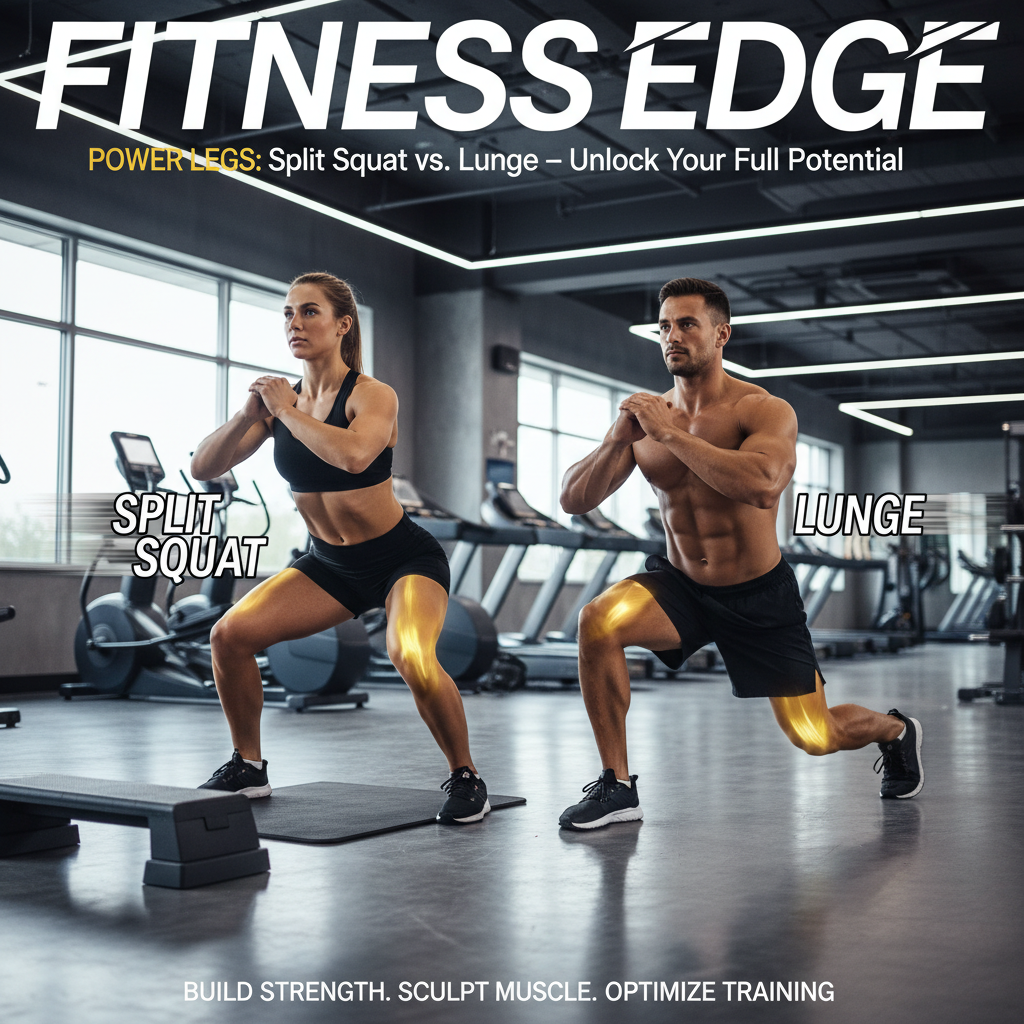
A split squat is a leg exercise where you place one foot forward and one foot back, keeping your feet in place. You lower your hips straight down by bending both knees. Your body moves up and down but your feet do not move. This makes the split squat a static movement. Split squats are good for building strength and balance in your legs.
2. What is a Lunge? (Dynamic Movement Explained)
A lunge is a dynamic leg exercise. You start standing tall, then step forward, backward, or sideways. As you step, you lower your hips by bending your knees, then push off to return to your starting position. Your feet move between each rep. Lunges help you build coordination, strength, and balance.
3. Key Differences in Form, Muscles Worked, and Benefits
- Movement Type: Split squats are static. Lunges are dynamic.
- Muscles Worked: Both work the quadriceps, hamstrings, glutes, and calves. Split squats target stability muscles more; lunges improve movement skills more.
- Benefits: Split squats improve balance and control. Lunges train coordination and can mimic sport movements.
How to Perform a Split Squat with Perfect Form
1. Step-by-Step Instructions with Visual Cues
- Stand tall. Place your right foot about two feet in front of your left foot.
- Keep your torso upright and your hands at your hips or by your sides for balance.
- Bend both knees. Lower your back knee toward the floor without letting it touch.
- Your front knee should form a 90-degree angle and stay above your ankle.
- Push through your front heel to rise back up to the starting point. Repeat for reps, then switch legs.
2. Common Mistakes and Troubleshooting Tips
- Knee Traveling Too Far Forward: Make sure your front knee stays above your ankle. Adjust your stance if needed.
- Leaning Forward: Keep your chest upright and eyes looking forward.
- Back Knee Hitting the Floor: Lower under control and stop just above the ground.
3. Progressions and Variations (Bulgarian, Weighted, etc.)
- Bulgarian Split Squat: Place your back foot on a bench for added difficulty.
- Weighted Split Squat: Hold dumbbells or a barbell for extra resistance.
- Paused Split Squat: Hold at the bottom for a few seconds to increase time under tension.
How to Do Lunges Safely and Effectively
1. Step-by-Step Instructions with Visual Cues
- Start standing with your feet hip-width apart.
- Step forward about two feet with your right foot.
- Bend both knees, lowering your hips until both knees are at about 90 degrees.
- Push off with your right foot to return to the starting position.
- Alternate legs or complete all reps on one side, then switch.
2. Common Lunge Mistakes and How to Fix Them
- Wobbly Knees: Focus on keeping your knee in line with your toes. Use a mirror for feedback.
- Short Steps: Step far enough to keep your front knee above your ankle, not past your toes.
- Leaning Back: Keep your upper body straight and core engaged.
3. Lunge Variations (Forward, Reverse, Walking, etc.)
- Forward Lunge: Step forward and return to start.
- Reverse Lunge: Step backward instead of forward. Easier on the knees.
- Walking Lunge: Step forward with each rep, moving across the room.
- Lateral Lunge: Step to the side for inner thigh activation.
Choosing Between Split Squats and Lunges: Which Is Right for You?
1. For Beginners: Safety and Adaptations
- Start Slow: If you are new, begin with bodyweight split squats or reverse lunges for more control.
- Use Support: Hold onto a chair or wall if you feel unsteady.
2. For Athletes: Sport-Specific Applications and Performance
- Lunges for Sport: Improve performance in running, jumping, and changing direction.
- Split Squats: Boost lower body strength for explosive power and stability.
3. For Injury Prevention and Rehab
- Controlled Split Squats: Useful in rehab as they train single-leg strength with less movement risk.
- Reverse Lunges: Easier on the knees, good for building strength safely after injuries.
Programming Split Squats and Lunges for Your Fitness Goals
1. Building Strength, Hypertrophy, or Endurance
- Strength: Use 3-5 sets of 6-8 reps with weights.
- Hypertrophy (Muscle Growth): Try 3-4 sets of 8-12 reps.
- Endurance: Train with bodyweight for 2-4 sets of 15-20 reps.
2. How to Mix Both Exercises into a Weekly Routine
- Do split squats on one lower-body day, lunges on another.
- Allow at least one rest day between similar sessions for recovery.
- Example: Monday – Split Squats, Thursday – Walking Lunges.
3. Sample Workout Templates for 2026
| Day | Exercise | Sets | Reps |
|---|---|---|---|
| Monday | Split Squat | 3 | 10 per leg |
| Wednesday | Reverse Lunge | 3 | 12 per leg |
| Friday | Bulgarian Split Squat | 4 | 8 per leg |
| Saturday | Walking Lunge | 3 | 15 per leg |
Frequently Asked Questions about Split Squat vs Lunge
- Q: Which exercise is easier for beginners? A: Split squats are usually easier because your feet stay in place. Try split squats before lunges if you are new.
- Q: Can I do both in one workout? A: Yes. Use one as your main exercise and the other as an accessory movement.
- Q: Are lunges bad for my knees? A: No, if done with good form. If you have knee pain, try reverse lunges or speak with a professional.
- Q: How can I make them harder? A: Add weights, do more reps, try Bulgarian split squats, or progress to jumping lunges.
- Q: How many times per week should I do these exercises? A: 2-3 times per week is great for results and recovery.
Resources: Video Tutorials, Progress Trackers, and Further Reading
- Video Tutorials: Search “split squat tutorial” or “lunge tutorial” on YouTube for visual learning.
- Progress Trackers: Use free workout apps or printable charts to log sets, reps, and weights.
- Further Reading: Visit reputable fitness websites, books on strength training, or ask your physical education teacher for recommendations.
Summary: Key Points and Next Steps
- Split squats and lunges are both excellent for leg strength, balance, and fitness.
- Split squats are static and easier for beginners. Lunges involve stepping and challenge coordination.
- Good form prevents injuries and gets better results.
- Use progressions, mix both exercises into your routine, and track your progress for the best results.
- Start with bodyweight versions, then increase difficulty as you improve.
Now you have the tools to master the split squat and the lunge. Try them out, stay consistent, and enjoy your stronger legs!