Leg Press vs Squat – Definitions, History, and Evolution
What is a Leg Press? Types and Functionality in 2026
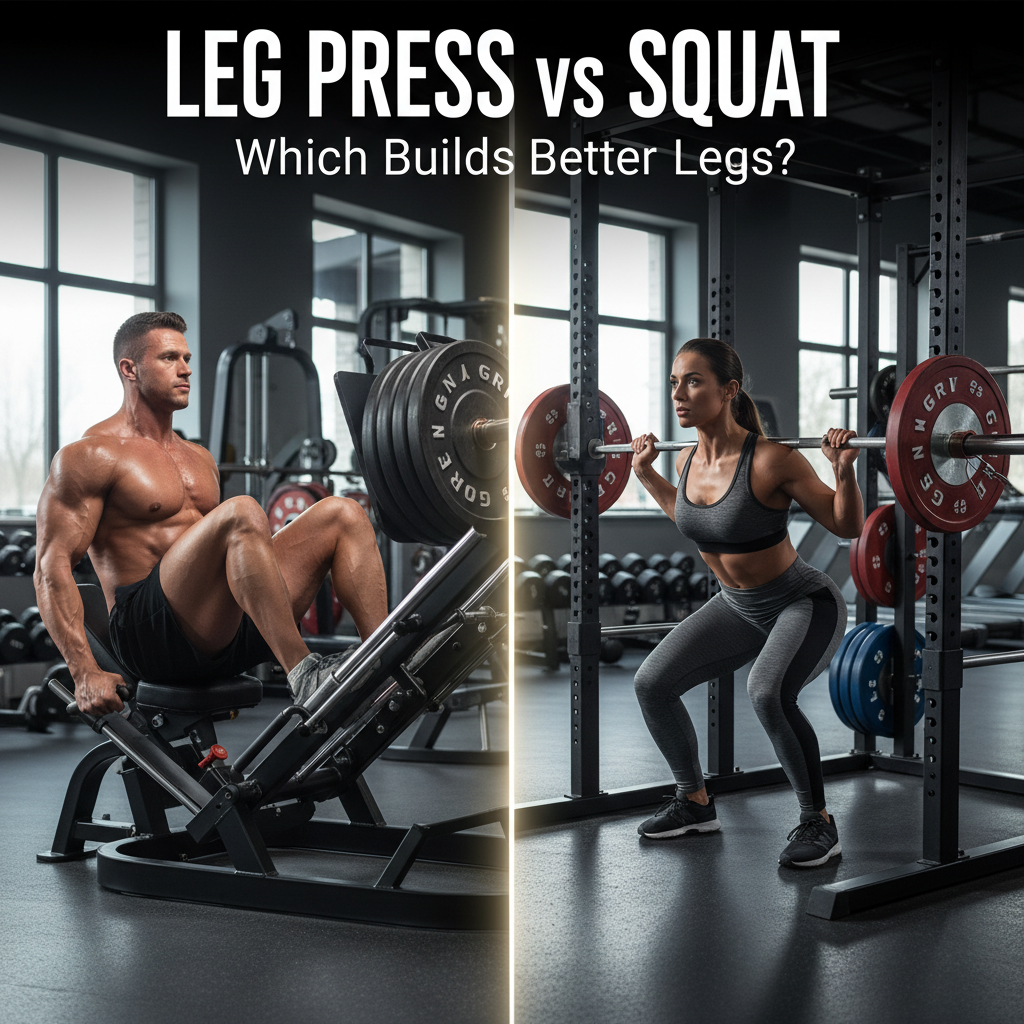
The leg press is a machine-based exercise focusing on lower body strength. In 2026, options include horizontal, 45-degree, and vertical leg presses, with smart sensors for form feedback. These machines allow users to adjust resistance easily, offering targeted quadriceps, glute, and hamstring stimulation in a stable seated or supine position.
What is a Squat? Variations and Legacy
The squat is a free-weight or bodyweight exercise dating back centuries. It builds full-body strength, especially in the quads, hamstrings, glutes, and core. Variations include back squats, front squats, goblet squats, and single-leg squats. Squats remain central in athletic and general fitness due to their functional value.
Leg Press vs Squat: Historical Trends and Exercise Popularity
Squat popularity surged from Olympic lifting, while leg presses grew with commercial gym machines in the 20th century. By 2026, both are staples. Wearable tech and smart gym equipment increased interest in data-driven training for both squats and leg press exercises.
Leg Press vs Squat – Muscles Worked, Form, and Science Explained
Leg Press vs Squat Muscle Activation: EMG Data and Biomechanics
| Muscle Group | Leg Press (EMG, %MVC) | Squat (EMG, %MVC) |
|---|---|---|
| Quadriceps | 85-95 | 75-92 |
| Glutes | 52-67 | 70-98 |
| Hamstrings | 30-45 | 50-63 |
| Core | Low | High |
EMG studies confirm squats engage more core and glutes, while leg press emphasizes isolated quad activation. Leg press minimizes stabilizer demand.
Force, Torque, and Range of Motion: How Leg Press vs Squat Compare
The leg press allows higher loads with less technical skill and joint torque. Squats offer greater range of motion and require joint and core stability, enhancing functional transfer but increasing complexity.
Scientific Studies: Meta-Analysis and 2026 Research Updates
Recent studies (2024–2026) show both exercises improve lower body strength. Squats outperform in functional balance and core benefits. Leg press is optimal for isolated muscle hypertrophy and safe strength building for beginners or during rehabilitation.
Leg Press vs Squat – Pros, Cons, and Who Should Use Each
Leg Press Benefits and Drawbacks: Safety, Load, and Accessibility
- Pro: Less technical skill, lower injury risk, accessible for all levels, easier to isolate lower body.
- Con: Less core activation, less functional carryover, machine-dependent.
Squat Benefits and Drawbacks: Functional Strength, Core, and Balance
- Pro: Improves total-body strength, functional mobility, core engagement, and athletic performance.
- Con: Increased technical demands, higher risk if form is poor, not ideal for all injury scenarios.
Leg Press vs Squat for Injury Recovery and Special Populations
The leg press is safer post-injury due to lower demands on the spine and stabilizers. Squats, when supervised, rebuild balance and core but may need modification during recovery. Consult a specialist before returning to advanced movements.
Leg Press vs Squat – Custom Training and Population-Specific Recommendations
Women and Lower Body Development: Leg Press vs Squat Considerations
Both exercises effectively build lower body musculature. Leg press is appealing for glute and quad isolation. Squats offer enhanced functional strength and fat-burning potential. A program rotating both yields the best physique and strength benefits.
Seniors and Joint Health: Best Choices for Longevity
Leg press supports joint safety and is easily adjusted. Squat variations with guidance help maintain mobility and strength. Both offer bone health advantages when performed with proper technique and volume.
Athletes and Powerlifters: Performance, Periodization, and Programming
Squats are fundamental for explosive power and sport transfer. Leg press enhances volume during high-frequency training blocks and minimizes spinal stress. Athletes combine both for muscular growth and injury resilience.
2026 Fitness Tech: Optimizing Leg Press vs Squat with AI and Wearables
Form Analysis Apps and Wearable EMG: Enhancing Your Leg Press and Squat
Advanced apps provide real-time feedback for squat mechanics and leg press foot placement. Wearable EMG devices track muscle symmetry, helping correct imbalances.
Data-Driven Progress: AI Coaching, Recovery, and Leg Press vs Squat Metrics
AI-driven programs suggest workloads and rest periods personalized to your biology, boosting both leg press and squat gains. Tracking devices measure bar path, range of motion, and recovery states for optimized planning.
Home Gym Innovations: Smart Equipment for Leg Press and Squat
- Connected squat racks detect form breakdown.
- Leg press machines with rep counting and safety locks.
- Cloud-based tracking for progress and recovery scores.
Explore the latest smart fitness equipment for leg press and squat training at Rogue Fitness and Technogym.
Leg Press vs Squat – Hybrid Routines and Sample Programs
Combining Leg Press and Squat for Hypertrophy and Strength
- Start with barbell squats for compound activation.
- Add leg presses for safe, high-rep muscle damage.
- Alternate intensity and volume weekly.
Weekly Programming Examples for Different Goals
| Goal | Squat | Leg Press |
|---|---|---|
| Strength | 4 x 5 (Heavy) | 3 x 8-10 (Moderate) |
| Hypertrophy | 4 x 8-10 | 4 x 12-15 |
| Rehabilitation | Box Squat 3 x 8 | Leg Press 3 x 15 |
Customization Tips Using Modern Recovery and Tech Tools
Adjust sets and reps based on wearable recovery data. Use in-app guidance to monitor fatigue and auto-regulate intensity.
Leg Press vs Squat and Nutrition: Modern Fueling and Recovery Insights
Nutrition Science for Lower Body Strength in 2026
Protein intake of 1.6–2.2 g/kg supports leg gains. Time carbs post-session to maximize muscle glycogen for heavy squat or leg press training days.
Supplementation Strategies for Leg Press and Squat Progress
- Creatine: boosts strength and recovery
- BCAAs: supports muscle protein synthesis
- Electrolytes: reduces cramping in long sessions
Recovery Protocols: Sleep, Active Recovery, and Monitoring Tools
Prioritize 7–9 hours sleep, schedule active recovery days after high-volume squats or leg press, and use sleep trackers for optimized programming.
Common Questions About Leg Press vs Squat (2026 Edition)
Can You Replace Squats with Leg Press for Similar Results?
Leg press can substitute for squats to build basic lower body strength, but lacks full-body and core engagement provided by squats. For overall fitness, integrate both.
Leg Press vs Squat for ACL/PCL Rehab – What Does the Latest Research Say?
2026 research indicates leg press is safer in early rehabilitation while squats are reintroduced gradually. Always follow physiotherapist recommendations.
How Do Wearables and AI Change the Debate in 2026?
Wearables give real-time feedback on muscle use and movement quality, making both exercises safer and more productive for every skill level.
Expert Insights and Real-World Case Studies: Leg Press vs Squat Success Stories
Pro Coaches Weigh In: Squat, Leg Press, or Both?
Elite coaches recommend combining squats and leg presses for maximum hypertrophy, safety, and athleticism, tailored to goals and experience.
Athlete Journeys: Breaking Through Plateaus with Leg Press and Squat
Case studies show lifters overcome plateaus by integrating both moves. Alternating focus periods rejuvenates gains and reduces overuse injuries.
Avoiding Common Mistakes in Leg Press vs Squat Training
- Neglecting form checks.
- Overloading without progression planning.
- Ignoring core training with exclusive leg press focus.
- Failing to listen to recovery feedback.
Ready to upgrade your workout? Shop smart squats and leg press equipment online at Rogue Fitness or Technogym and start training smarter today!