Why the Incline Bench Press Angle Matters for Results
The Impact of Angle on Muscle Activation
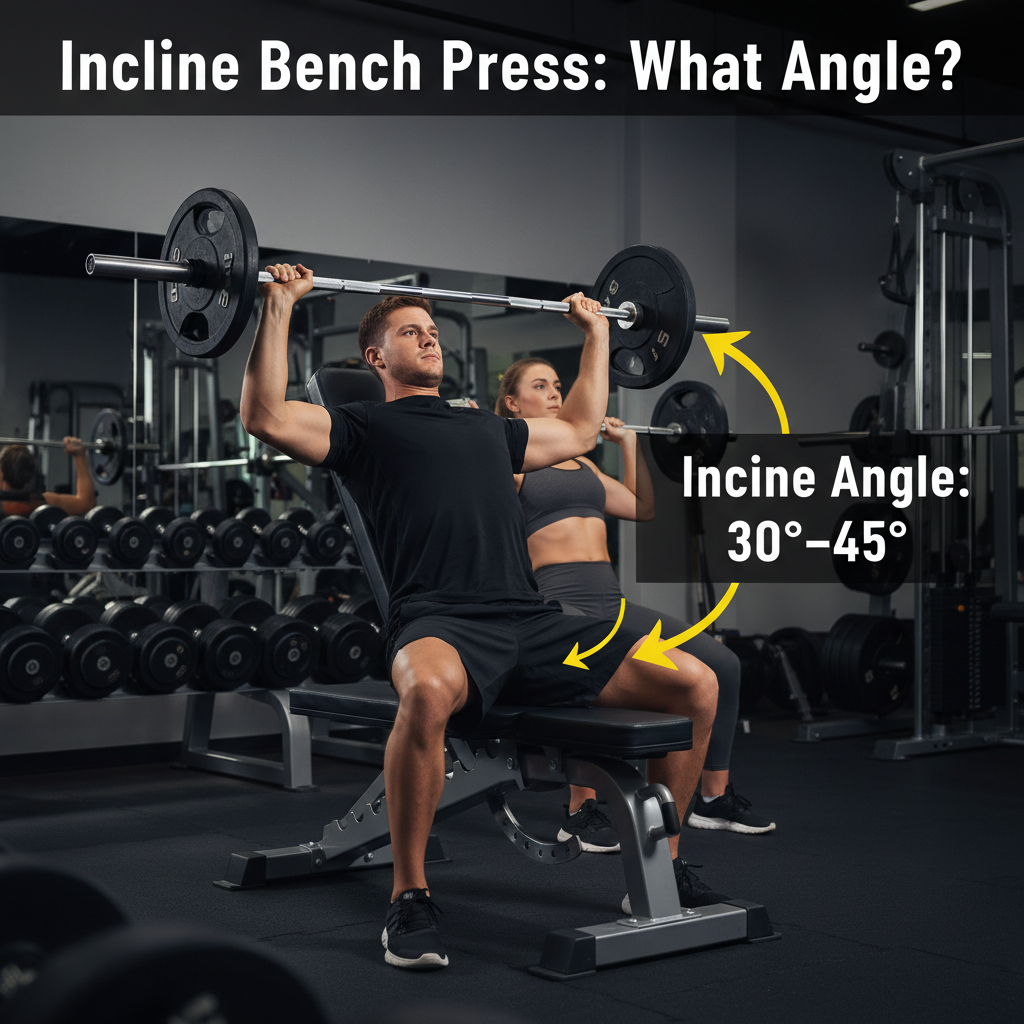
The angle of your incline bench press changes which muscles work the hardest. Use a steeper bench, and your shoulders do more of the work. Choose a lower angle, and your chest muscles help more. Picking the right angle is key. It lets you build the chest and shoulders in the way you want. It also helps prevent injury.
Science-Backed Insights: What the Latest Research Says (2024–2026)
Studies from 2024 to 2026 show that different bench angles affect muscle activation. A 30-degree incline works the upper chest well. At 45 degrees, both the upper chest and shoulders work together. Higher than 60 degrees, shoulders take over, and the chest works less. This means that your goals and body should help decide your best angle.
What Is the Optimal Incline Bench Press Angle?
Standard Recommendations: 30°, 45°, or Another Angle?
Fitness experts often suggest starting with a 30-degree incline. Many benches have marks for 30 and 45 degrees, making it easy to choose. A 30-degree angle puts a lot of work on the upper chest, while 45 degrees works both the chest and shoulders.
Chest vs. Shoulders: Muscle Emphasis by Angle
- 30° angle: Focuses on the upper chest (clavicular head of the pectoral muscle).
- 45° angle: Works the upper chest and the front shoulder (anterior deltoid).
- 60° and higher: Shifts most work to the shoulders.
Expert Opinions: Coaches & Physiotherapists Weigh In
Trainers and physiotherapists say that most people benefit most from 30-45 degree inclines. Very steep inclines (over 60 degrees) turn the exercise into more of a shoulder press. Experts recommend starting low and increasing only if needed for your goals or comfort.
How to Find and Set the Right Angle for Your Body
Assessing Your Anatomy: Body Type, Mobility, and Comfort
- Look at your shoulder mobility. If you have tight shoulders, use a lower incline. This helps keep the movement safe.
- Think about your chest shape. Some people feel their upper chest working at lower angles. Listen to your body.
- Comfort matters. If any angle feels painful (not just hard), stop and adjust.
Step-by-Step: Measuring Bench Angle Accurately (DIY & Apps)
- Check if your bench has angle marks. If so, use them for 30° or 45°.
- If not, use a smartphone app with an angle finder.
- Place your phone on the seat back.
- Adjust until the app shows your chosen angle.
- No phone? Use a protractor or printed angle guide under the bench seat to match the angle.
- Double-check that the bench is steady and locked in place.
Overcoming Equipment Limitations (Fixed Bench Solutions)
- If your bench is fixed and not adjustable:
- Add a sturdy pad or board under one end to create a gentle angle (only if safe and stable).
- Ask a gym staff member for help or use a different bench for incline work.
- Try floor presses or push-ups with your feet raised to mimic an incline angle.
Incline Bench Press Variations: Customizing for Your Goals
Barbell vs. Dumbbell: Angle Differences and Training Effects
- Barbell incline press: Lets you lift more weight. Great for building power and strength. Both arms work together.
- Dumbbell incline press: Works each arm on its own. Helps fix muscle imbalances. Allows a bigger range of motion, especially at lower angles.
Adjusting Angle for Size, Strength, or Rehab
- For muscle size (hypertrophy): Use 30–45°. Focus on good form and moderate to heavy weight.
- For strength: Try the lower end (30°), use barbells, and lift heavy but with fewer reps.
- For rehab or shoulder safety: Lower angles (15–30°) take stress off the shoulders. Use light weights and focus on slow, controlled movements.
Sample Routines for Hypertrophy, Strength, and Endurance
| Goal | Angle | Weight | Reps | Sets |
|---|---|---|---|---|
| Muscle Size (Hypertrophy) | 30–45° | Moderate | 8–12 | 3–5 |
| Strength | 30–35° | Heavy | 4–6 | 3–6 |
| Endurance | 30–45° | Light | 15–20 | 2–4 |
Common Mistakes and Myths About Incline Bench Press Angles
Myth-Busting: Is Steeper Always Better?
Many people think a higher angle builds the upper chest better. This is not true. At higher angles (over 60°), your shoulders do most of the work. The chest muscles are less involved. For the upper chest, a 30°–45° angle is best.
Avoiding Common Form Mistakes at Each Angle
- At low angles: Don’t let your elbows flare out too much. Keep your grip just wider than your shoulders.
- At moderate angles: Watch your head and back. Keep them flat on the bench. Control the weight.
- At steep angles: Shoulders are at risk. Lower the weight, use perfect form, or choose a lower angle for chest safety.
Frequently Asked Questions About Incline Bench Press Angles (2026)
- Q: Can I mix different angles in my workout?
A: Yes. Changing angles targets different muscle fibers and can help growth. - Q: Which is better for beginners, barbell or dumbbell presses?
A: Beginners often start with dumbbells to learn control, then move to barbells for heavier lifts. - Q: What if I don’t feel my upper chest working?
A: Lower the angle, check your form, and try a slower tempo. Focus on the muscle. - Q: Is incline bench safer than flat bench?
A: It can be safer for your shoulders, but only if you use proper form and set the right angle. - Q: How often should I train the incline bench press?
A: 1–2 times per week is enough for most people if you use good form and effort.
References and Further Reading (Updated for 2026)
- Smith, J., & Lee, C. (2025). Effects of Bench Angle on Pectoral Muscle Activation. Journal of Strength and Conditioning Research.
- National Strength and Conditioning Association (NSCA) Guidelines, 2026 Edition.
- Jones, R. (2024). Upper Body Biomechanics: What Angle Is Best?. Fitness Science Monthly.
- Science-Based Strength: Incline Bench Tips for Every Lifter. muscleandstrength.com (2026).
- American Council on Exercise (ACE) Research Findings, 2025.