Introduction to the Bench Press in 2026
Why Proper Bench Press Form Matters
The bench press is one of the most popular exercises for building upper body strength. Doing the bench press with the right form helps you gain more muscle and avoid injuries. In 2026, new research still shows that correct bench press form can make your workouts safer and more effective.
Key Muscles Worked During Bench Press
The bench press works several important muscles:
- Chest (pectoralis major)
- Shoulders (anterior deltoids)
- Triceps (back of the arms)
- Secondary: upper back and core for stability
Bench Press Setup: Foundation for Correct Form
Equipment Checklist and Safety Gear
Before starting, make sure you have:
- Flat bench
- Barbell with weight plates
- Weight collars
- Safety rack or spotter
- Proper footwear
- Optional: lifting gloves or wrist wraps
Barbell, Bench, and Body Positioning
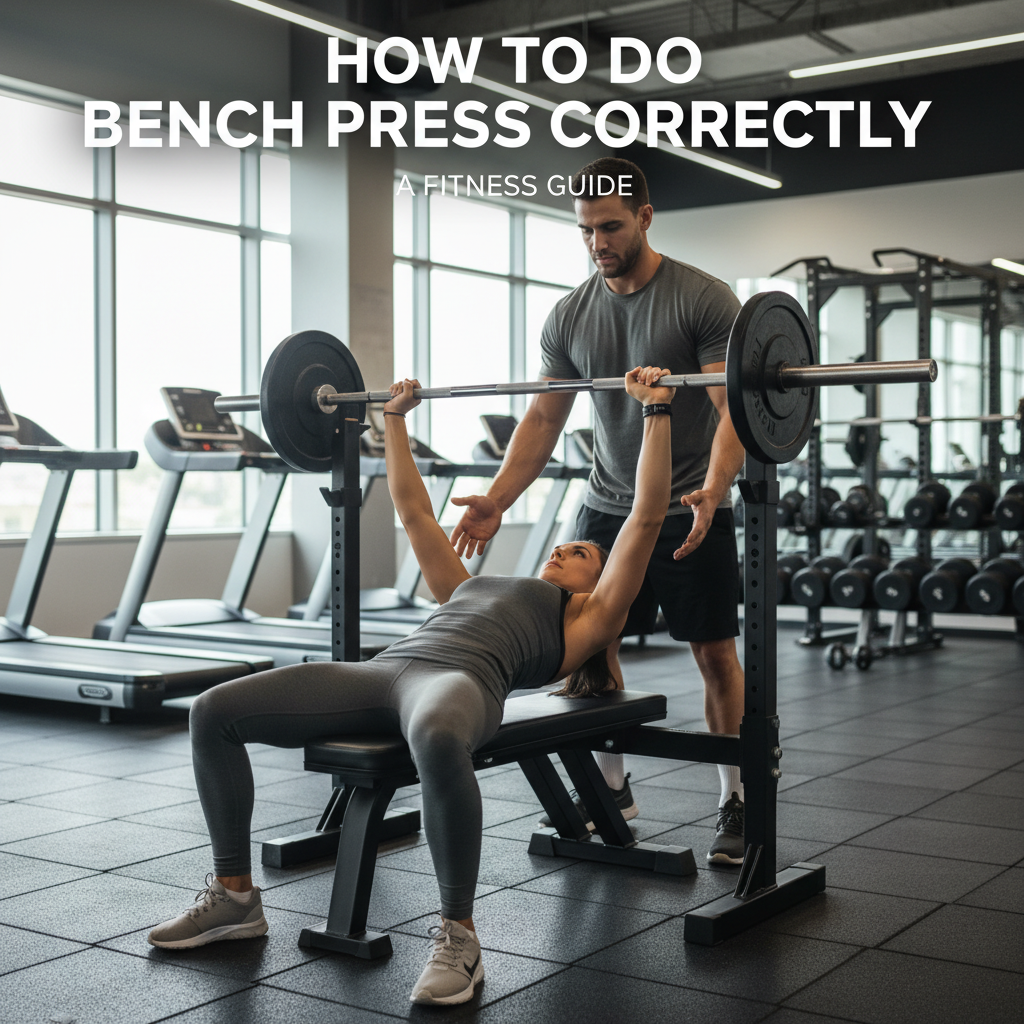
- Place the bench under the rack so your eyes are directly below the bar.
- Lie down with feet flat on the floor and knees bent.
- Barbell rests above your eyes before lifting.
- Grip the bar evenly with both hands, usually slightly wider than shoulder-width apart.
New 2026 Insights: Grip Width and Bar Path Science
In 2026, studies suggest optimal grip width is 1.5 to 2 times shoulder width for most people. The bar should move in a slight arc, starting over the eyes and lowering to the middle of your chest.
Step-by-Step Guide: How to Bench Press Correctly
The Perfect Setup: Feet, Back, and Shoulder Blades
- Plant your feet firmly on the floor.
- Slightly arch your lower back. Your buttocks and upper back stay on the bench.
- Pull your shoulder blades back and down for a stable base.
Unracking the Bar Safely
- Grip the bar tightly.
- Take a deep breath to brace your core.
- Push the bar up and move it over your chest before starting your set.
Controlled Descent and Proper Touchpoint
- Lower the bar slowly to the middle of your chest.
- Keep elbows at about a 75-degree angle from your body.
- Touch your chest gently. Do not bounce the bar.
Pressing Up: Power Generation and Lockout
- Push the bar straight up while keeping your whole body tight.
- Arms should be fully straight at the top (lockout), but don’t hyperextend elbows.
Re-Racking with Spotter Tips
- Finish all reps with arms locked out.
- Slowly move the bar back towards the rack.
- Lower the bar into the hooks securely.
- If possible, always use a spotter for added safety.
Visual Cues & Common Form Mistakes
Recognizing Poor Form: Photos and Diagrams
Look for warning signs like arched backs, bouncing the bar, flared elbows, or uneven grips. Many 2026 guides show correct and incorrect bench press form with graphics. Make sure your body matches the proper poses shown.
Troubleshooting: What to Fix (and How)
- If your feet lift off the ground, widen your stance for more balance.
- If the bar drifts towards your face or stomach, realign your grip and eyes to the bar.
- If shoulders feel pain, adjust your grip width or lower the weight.
Self-Assessment Checklist for Bench Press Form
- Feet flat and steady?
- Shoulder blades back and down?
- Bar path straight, touching mid-chest?
- No bouncing or twisting?
- Full control both up and down?
Injury Prevention and Safe Progression
Table: Common Bench Press Injuries and How to Avoid Them
| Injury | Cause | Solution |
|---|---|---|
| Shoulder Strain | Elbows flared, too wide grip | Keep elbows tucked, use right grip |
| Wrist Pain | Bending wrists back | Keep wrists straight, use wrist wraps |
| Lower Back Pain | Overarching back | Maintain slight arch, engage core |
| Pec Tear | Too much weight, poor warm-up | Warm up, progress slowly |
2026 Warm-up & Mobility Protocols
- 5–10 minutes cardio (jump rope or treadmill)
- Dynamic stretches: arm circles, band pull-aparts
- Warm-up sets with just the bar or light weights
Spotting Techniques and When to Use a Spotter
- A spotter stands behind the bench, ready to assist if you struggle.
- Use a spotter for heavy sets or if you’re a beginner.
- Use clear signals to communicate before each set.
Bench Press Variations and Their Purposes
Incline, Decline, and Close-Grip Bench Explained
- Incline Bench Press: Targets upper chest and shoulders more.
- Decline Bench Press: Emphasizes lower chest.
- Close-Grip Bench Press: Focuses on triceps.
Dumbbell vs. Barbell Bench Press
- Dumbbells allow more freedom and fix strength imbalances.
- Barbell allows for heavier lifts and easier progression tracking.
Specialty Variations for Advanced Lifters
- Paused Bench Press
- Board Press
- Slingshot Bench
- Tempo Bench (slower reps)
Programming the Bench Press for Results
Sets, Reps, and Rest: Simple Charts for Every Level
| Level | Sets | Reps | Rest (minutes) |
|---|---|---|---|
| Beginner | 3 | 8-12 | 1-2 |
| Intermediate | 4 | 6-8 | 2-3 |
| Advanced | 5 | 3-5 | 3-5 |
How to Integrate Bench Press in Full-Body Routines
- Add bench press on upper body or push days.
- Pair with back exercises for balance.
- Allow 48–72 hours recovery before repeating heavy bench work.
Progression Tips for Plateau-Busting in 2026
- Increase weight by small amounts every week.
- Use bench press variations to shock muscles.
- Track all lifts in a workout log.
- Focus on correct bench press form, not just weight.
Bench Press Myths and Outdated Advice (2026 Edition)
Debunking Persistent Misconceptions
- “You must flare elbows for big chest” — This raises injury risk. Keep elbows at a safe angle.
- “Bouncing the bar boosts strength” — This is dangerous and harms progress.
- “Bench press is all you need for a strong chest” — Variety helps more.
What Science Says: 2026 Research Updates
- Proper setup and warm-up cut injury risk by up to 40%.
- Moderate grip (not super-wide) is safest and most powerful for most people.
- Rest and recovery matter just as much as training intensity.
Frequently Asked Questions: Bench Press Form and Safety
- How often should I bench press? 1–2 times per week is enough for most people.
- Is a spotter always necessary? Yes, when lifting heavy.
- Can I use the smith machine? It’s safer for some, but free weights build more stability.
- How do I avoid shoulder pain? Use proper form, warm up, and don’t go too heavy.
Interactive: Self-Quiz & Printable Bench Press Checklist
Bench Press Self-Quiz
- Are your feet flat and stable every set?
- Does the bar touch the same spot on your chest each rep?
- Are your wrists straight during lifting?
- Do you keep full control of the bar at all times?
- Are you using a weight you can handle safely?
Printable Bench Press Checklist
- Equipment and safety gear ready
- Bench, bar, and body in position
- Shoulder blades set, grip correct
- Controlled reps, bar path steady
- Spotter present for heavy or hard sets
Conclusion: Key Points and Next Steps
Learning how to do bench press correctly is essential for strength and safety. Always focus on perfect form, warm up before every session, and use spotters for big lifts. Stick to a plan, track your progress, and try new bench press tips and routines in 2026. Review this guide regularly, check your form, and make small improvements for the best results in your fitness journey.