Why Stretching Your Hamstrings Matters
Common Causes of Tight Hamstrings
Tight hamstrings are common for many people, especially teenagers. Long hours of sitting at a desk, playing sports without enough stretching, or even quick growth spurts can all make your hamstring muscles feel stiff. If you do not stretch your hamstrings regularly, they can become short and tight.
Benefits of Hamstring Flexibility
Stretching your hamstrings helps keep your legs flexible and strong. Good hamstring flexibility can improve sports performance, reduce the risk of muscle strains, make daily movements easier, and decrease chances of lower back pain.
The Science Behind Hamstring Stretching
How Stretching Affects Muscle Fibers
When you stretch hamstrings, you gently pull the muscle fibers and tendons, making them longer and more flexible over time. Stretching sends signals to your muscles that help reset their length and prevent stiffness.
Dynamic vs. Static Hamstring Stretches: What’s the Difference?
- Dynamic stretches use gentle, controlled movement to warm up your muscles before exercise. Example: leg swings.
- Static stretches involve holding a stretch in one position for a set time, usually after exercise to increase flexibility. Example: seated hamstring stretch.
How to Stretch Hamstrings Safely: Preparation and Tips
Warm-Up Essentials Before Hamstring Stretches
Before doing hamstring stretches, start with a light warm-up. Walk, jog in place, or do jumping jacks for 3-5 minutes to get your blood flowing. Warm muscles stretch more easily and safely.
What You’ll Need (Equipment and Environment)
- Comfortable clothing that lets you move freely
- A yoga mat or soft carpet for seated or floor stretches
- A towel or stretching strap (optional, for support)
- A safe, open area with enough space to move
The 7 Best Hamstring Stretches (With Step-by-Step Instructions)
1. Supine Hamstring Stretch
- Lie flat on your back on the mat.
- Bend your left knee and keep your right leg straight.
- Lift your right leg up, holding the back of your thigh with both hands.
- Gently pull your leg toward you while keeping it straight. Stop when you feel a gentle stretch.
- Hold for 20-30 seconds, then switch legs.
2. Standing Hamstring Stretch
- Stand up straight, feet hip-width apart.
- Slowly bend forward at your hips, reaching for your toes.
- Keep your legs straight (but don’t lock your knees).
- Stop when you feel a stretch behind your thighs.
- Hold for 20-30 seconds. Return to standing slowly.
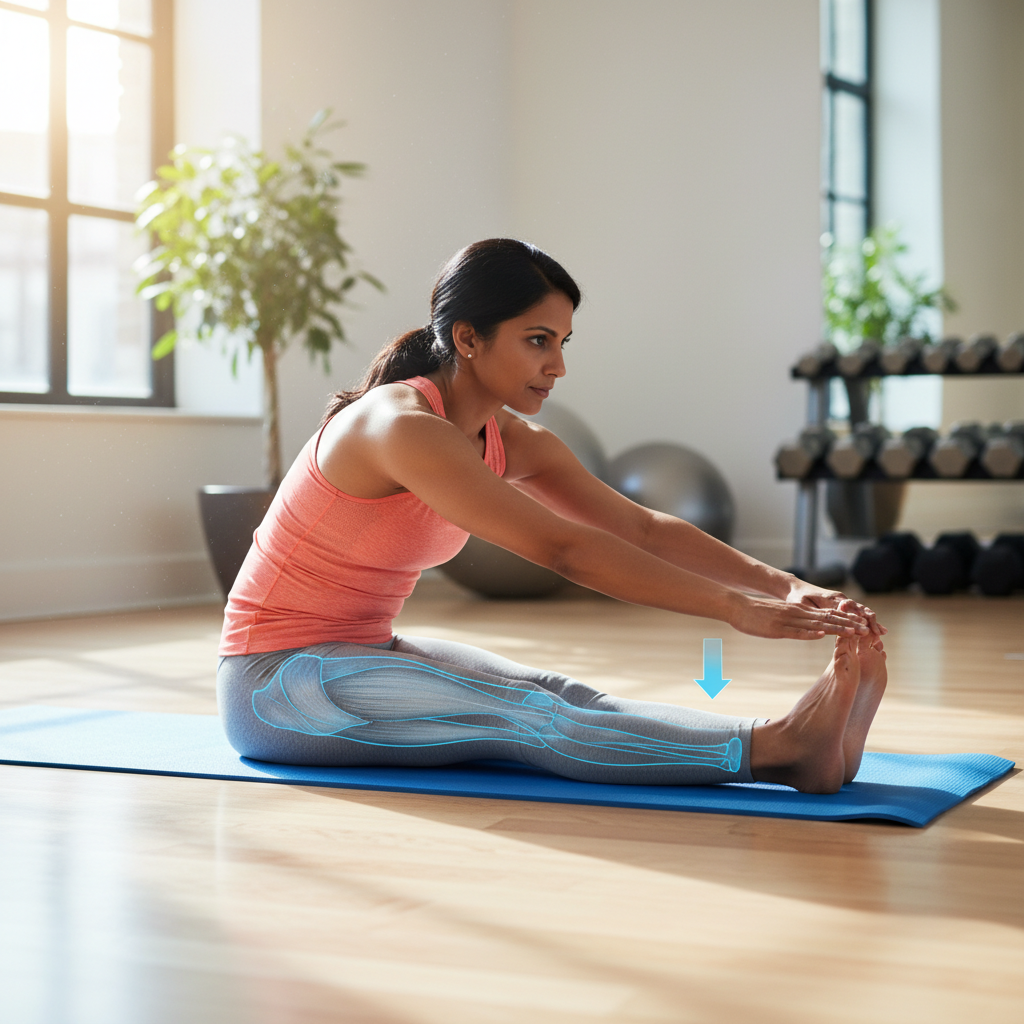
3. Seated Hamstring Stretch
- Sit on the floor, legs extended in front of you.
- Keep your back straight and flex your feet.
- Reach your hands toward your toes, keeping your chest lifted.
- Go as far as you can without rounding your back.
- Hold for 20-30 seconds and relax.
4. Dynamic Leg Swings for Hamstrings
- Stand next to a wall or chair for balance.
- Swing one leg forward and backward in a slow, controlled motion.
- Do 10-15 swings, then switch legs.
- Keep your movements smooth. This warms up your hamstrings.
5. Downward Dog Hamstring Stretch
- Start on your hands and knees on the mat.
- Lift your hips up and back, straightening your legs and arms.
- Try to press your heels toward the ground (don’t worry if they don’t touch).
- Feel the stretch along your hamstrings and calves.
- Hold for 20-30 seconds, then lower back down.
6. Wall-Assisted Hamstring Stretch
- Lie on your back close to a wall.
- Put one leg up against the wall, keeping it straight.
- The other leg can be bent or kept straight on the floor.
- Scoot closer to the wall until you feel a stretch in your hamstring.
- Hold for 20-30 seconds, then switch legs.
7. Partner-Assisted Hamstring Stretch
- Lie on your back and have a partner stand beside you.
- Lift one leg up, keeping it straight.
- Your partner gently holds your ankle and slowly pushes your leg toward you until you feel a stretch.
- Keep your other leg flat on the floor.
- Hold for 20-30 seconds, then switch legs.
Common Mistakes to Avoid When You Stretch Hamstrings
Rounding the Back and Poor Posture
When you stretch hamstrings, keep your back straight and avoid rounding your shoulders. Poor posture can make stretches less effective and strain your back.
Overstretching and Risk of Injury
Do not stretch past the point of mild discomfort. Overstretching can cause muscle strains or injuries. Listen to your body and do not bounce in a stretch.
Neglecting Warm-Ups or Proper Breathing
Never skip your warm-up! Also, breathe deeply and slowly while holding stretches. Proper breathing helps your muscles relax and stretch better.
Pro Tips for Effective Hamstring Stretching
How Often Should You Stretch Hamstrings?
For the best hamstring flexibility, stretch your hamstrings at least 3-4 times per week. You can even stretch every day if you like, especially after exercise or long periods of sitting.
Progression and Modifications for All Fitness Levels
- If you are a beginner, start with gentle stretches and hold for shorter times.
- As your hamstring flexibility improves, increase the hold time up to 60 seconds.
- To make stretches harder, try reaching farther or holding your leg at a higher angle.
- Use a towel or stretching strap if you cannot reach your leg comfortably.
How to Incorporate Hamstring Stretches Into Your Daily Routine
Best Times to Stretch: Morning, Before/After Workouts, and Evening
- Morning: Light hamstring stretches help wake up your muscles.
- Before workouts: Do dynamic hamstring stretches to prepare your legs.
- After workouts: Use static stretches to help your muscles relax and recover.
- Evening: Gentle stretches can help you unwind before bed.
Desk Job Stretching Strategies
- Stand up and do a standing hamstring stretch every hour if you sit a lot.
- Under your desk, extend one foot forward and flex it to stretch gently.
- Take short walks and do leg swings in a hallway if possible.
FAQ: How Do You Stretch Hamstrings – Your Top Questions Answered
Can You Stretch Hamstrings Too Much?
Yes. Overdoing hamstring stretches can cause injury. Stick to a gentle stretch and avoid bouncing.
What If I Feel Pain While Stretching?
If you feel sharp pain, stop immediately. Stretching should feel a bit uncomfortable, but never painful. If pain continues, ask a coach or doctor for help.
How Long Should Each Stretch Be Held?
Hold hamstring stretches for 20-30 seconds. You can repeat each stretch 2-3 times.
Can Stretching Help Prevent Hamstring Injuries?
Yes. Regular hamstring stretching improves flexibility and lowers your chance of muscle strains during sports or daily activities.
Best Stretching Options for Beginners and Advanced
- Beginners: Start with supine or wall-assisted hamstring stretches.
- Advanced: Try partner-assisted or combine stretching with light strengthening exercises.
Additional Resources and References for Hamstring Health
- National Health Service (NHS): Hamstring Stretches Guide
- American Council on Exercise (ACE): Flexibility Handouts
- Sports medicine books from your school library
- Online instructional videos (look for qualified instructors)
To sum up, learning how to stretch hamstrings is important for everyone, especially students and young athletes. With these easy steps and tips, you can make hamstring stretches a normal part of your life. Remember, a little effort each day leads to better flexibility, less stiffness, and a reduced risk of injury. Start stretching today!