Introduction: Why Understanding Hack Squat Muscle Activation Matters
What Are Hack Squats and Who Should Do Them?
Hack squats are a type of lower body exercise performed using a machine or barbell. They help build strength in the legs and improve muscle tone. This exercise is great for teens, beginners, and athletes looking to grow stronger legs safely.
Overview of Muscle Groups Targeted in Hack Squats
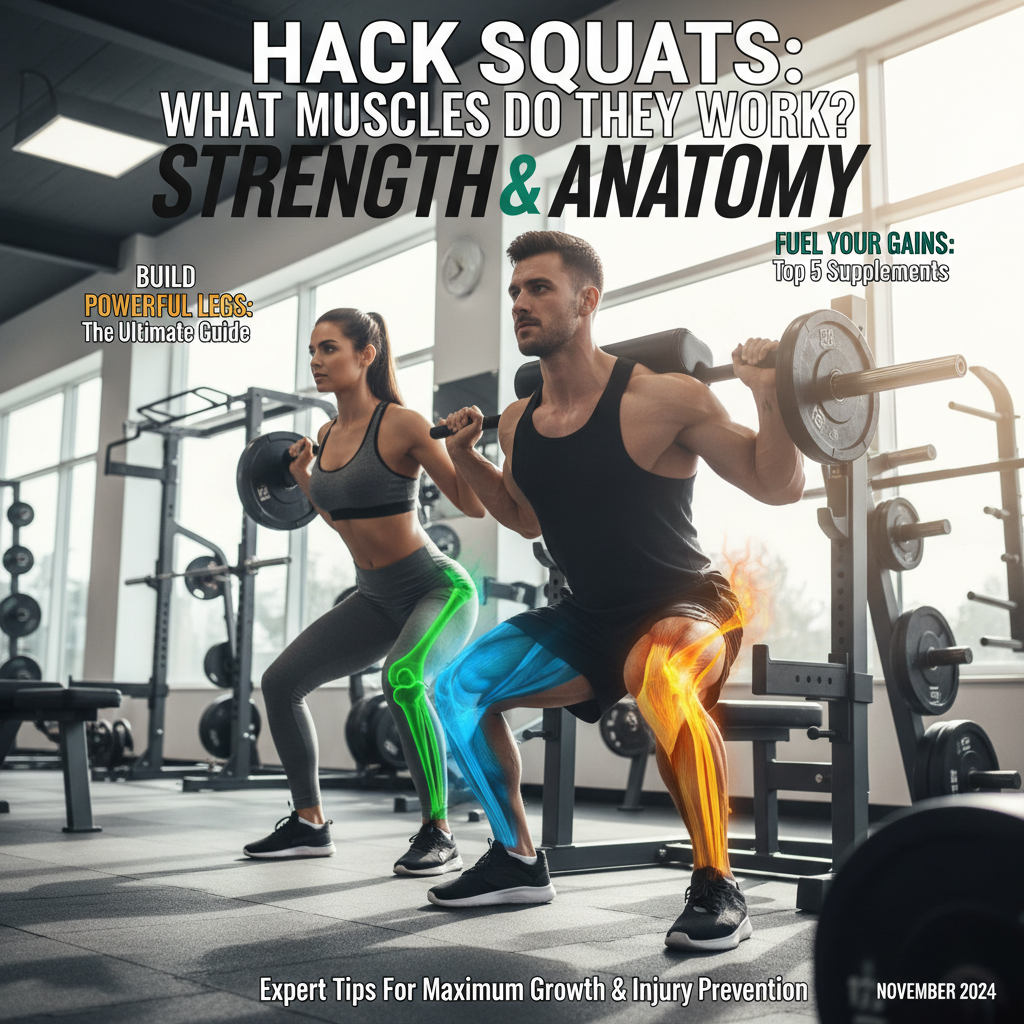
Hack squats mainly work your quads, but they also engage your glutes, hamstrings, calves, and other supporting muscles. Understanding which muscles are used helps you get better results and avoid injury.
The Anatomy of Hack Squats: What Muscles Get Worked and How
Primary Movers: Quadriceps Focus and Function
The quadriceps, also called “quads,” are the main muscles on the front of your thighs. During hack squats, these muscles straighten your knees and do most of the work when you push upwards.
Supporting Muscles: Glutes, Hamstrings, and Calves Explained
Your glutes (buttock muscles) help you stand up straight, while your hamstrings (back of your thighs) support knee movement. The calves at the lower back part of your legs help steady your body as you press through your feet.
Stabilizers and Secondary Benefits: Core, Adductors, Hip Flexors
Besides the main muscles, hack squats engage your core muscles, adductors (inner thighs), and hip flexors. These help keep your body stable, improve balance, and support healthy movement.
The Science of Hack Squat Biomechanics
How Body Position Impacts Muscle Activation
Your muscle use changes based on posture in hack squats. Squatting deeper or leaning back shifts focus among quads, glutes, and hamstrings. Keeping your back flat and feet secure increases safety and effectiveness.
Foot Placement Tweaks for Targeted Muscle Engagement
Changing your feet position can focus effort on different muscles:
- Feet higher on footplate: more glutes and hamstrings
- Feet lower: more quadriceps
- Feet wider: more inner thigh (adductors)
Joint Health and Hack Squat Safety Considerations
Proper hack squat form reduces stress on your knees and lower back. Never lock your knees, keep your back straight, and avoid rounding your shoulders. Start with light weights to build confidence and protect your joints.
How to Do Hack Squats with Perfect Form for Maximum Muscle Engagement
Step-by-Step How-To Guide (With Visual Cues)
- Position yourself under the hack squat machine’s shoulder pads.
- Place your feet shoulder-width apart on the footplate, toes slightly outward.
- Keep your chest and head up, and your back flat against the pad.
- Grip the handles for support.
- Bend your knees and slowly lower yourself until your thighs are about parallel to the footplate (like sitting on a chair).
- Push through your whole foot to return to the starting position, keeping your knees in line with your toes.
Breathing and Bracing for Power and Protection
Before you lower yourself, breathe in deeply and tighten your tummy muscles (like you’re bracing for a punch). Breathe out as you push back up. This supports your spine and helps you stay strong.
Muscle Activation Cues: Mind-Muscle Connection Tips
Focus on feeling your quads and glutes working during the movement. Squeeze your leg muscles at the top position and push evenly through your feet for best muscle growth.
Hack Squat Variations for All Levels and Goals
Beginner Modifications and Alternatives
- Use lighter weights or just the machine (no added plates) to learn the form.
- Try bodyweight squats or wall squats if no machine is available.
- Decrease depth if you find it hard to squat low at first.
Advanced Progressions: Reverse Hack Squat, One-Leg Variations
- Reverse hack squats work more glutes and hamstrings. Stand facing the pad, chest against it, and squat as usual.
- One-leg (unilateral) hack squats train balance and single limb strength. Use light weight to start and aim for even reps per side.
Customizing Hack Squats for Strength, Power, or Hypertrophy
- For strength: Use heavier weights and fewer reps (4-6 per set).
- For muscle size (hypertrophy): Use moderate weight and more reps (8-12 per set).
- For power: Control the lowering phase, then push back up quickly.
Hack Squats in Comparison: Are They Better than Other Squat Types?
Hack Squats vs. Back Squats: Muscle Emphasis, Benefits & Drawbacks
| Type | Muscle Focus | Pros | Cons |
|---|---|---|---|
| Hack Squats | Quads, safety | Easier to learn, good for knee tracking | Less core work, machine needed |
| Back Squats | Whole lower body, core | More functional, free barbell | Needs spotter, trickier form |
Hack Squats vs. Leg Press and Front Squats
- Leg press uses similar muscles but less balance. Hack squats involve more stabilizing muscles.
- Front squats target the quads but need more back strength and skill.
Common Mistakes and Myths with Hack Squats
Frequent Form Errors and How to Fix Them
- Knees caving inward—focus on pushing knees slightly out.
- Heels rising off the footplate—keep full feet flat for balance.
- Leaning forward—keep your back and head against the pad at all times.
Debunking Hack Squat Myths (Knee Safety, Glute Activation, Machine Myths)
- Myth: Hack squats are bad for knees. Truth: Proper form makes them safe.
- Myth: It does not work glutes. Truth: Foot position can increase glute action.
- Myth: Only machines are bad. Truth: Machines can be useful for learning new movements.
How to Avoid Plateaus and Promote Continuous Progress
- Add more weight slowly or do more reps as you get stronger.
- Try different squat variations and foot placements.
- Always track your workouts to see progress.
Expert Insights: Hack Squats in Sports Performance and Rehab
Perspectives from Physical Therapists on Safe Hack Squat Use
Physical therapists say hack squats are great for strengthening leg muscles safely when recovering from injury. They suggest using light weights and focusing on smooth form to protect joints.
Athlete and Bodybuilder Insights: Maximizing Results
Athletes and bodybuilders use hack squats to isolate and grow quad muscles. They recommend mixing hack squats with other leg exercises for best growth.
Sports Science Takeaways and Research Findings (2026)
Recent research shows hack squats are effective for building quadriceps, improving knee health, and boosting sports performance with less lower back stress than traditional squats.
Recovery and Programming Tips after Hack Squats
Best Practices for Muscle Recovery and Growth
- Stretch your legs after each workout to reduce tightness.
- Get enough sleep and eat protein-rich foods for muscle repair.
- Rest at least one day between heavy squat sessions.
How to Integrate Hack Squats into a Balanced Lower Body Routine
- Combine hack squats with other exercises like lunges and calf raises.
- Try 2-3 sets of hack squats per session, 2 times per week for balanced development.
FAQ: Everything You Want to Know About Hack Squats and Muscles Worked
Answers to Top Searched Questions in 2026
- What muscles do hack squats work the most? — Main focus is on quadriceps, with help from glutes, hamstrings, calves, and core.
- Can beginners do hack squats? — Yes! Start with lighter weights to learn safe form.
- How are hack squats different from regular squats? — Hack squats use a machine and target quads more, with less balance needed.
- Is hack squat safe for knees? — Yes, if you use correct form and don’t lock your knees.
- Should I do hack squats or back squats? — Both are good; choose hack squats to focus on quads and learn squat form safely.
References and Further Reading on Hack Squats and Muscle Activation
- Peer-reviewed sports science journals (2022-2026) on lower body exercise and squat variations
- Guidelines from the American Council on Exercise (ACE)
- Expert articles from Physical Therapy and Sports Performance professionals