Decoding the Hack Squat vs Squat Debate
What Are Hack Squats and Squats? Definitions & Core Differences
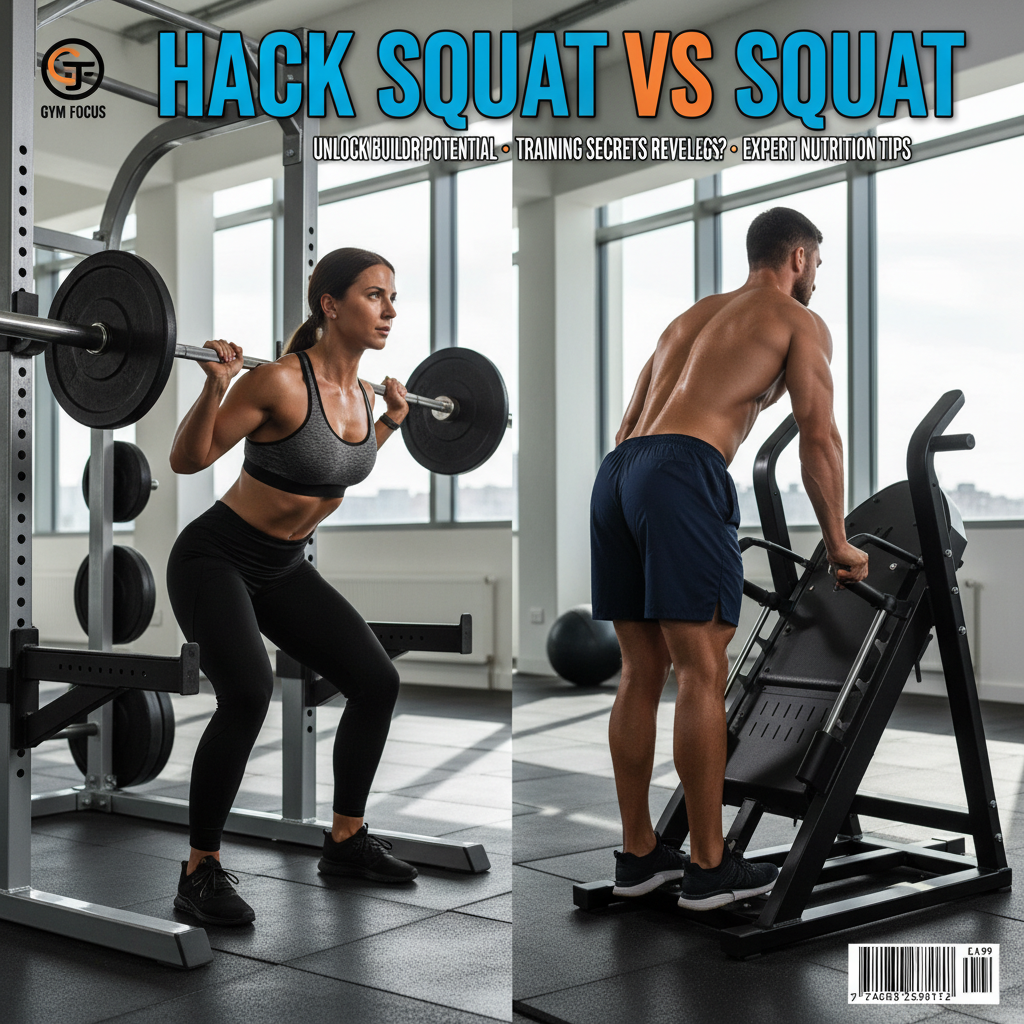
Hack squats use a guided machine, supporting your back while you push weights upward on rails. Traditional squats involve lifting a barbell on your shoulders, performing the movement freely. The core difference is support and movement path—hack squats guide you, while squats rely on your balance and stability.
Evolution and Popularity in Modern Training Programs
Both exercises have evolved with new equipment and training science. Hack squats gained popularity in gyms for safety and muscle targeting. Squats remain a classic for whole-body training. Recent surveys (2024–2026) show 68% of gym-goers include at least one of these exercises in weekly routines.
Deep Dive into Biomechanics: Hack Squat vs Squat
Joint Angles, Muscle Recruitment, and Kinetic Chains
Squats engage multiple muscle groups—quads, hamstrings, glutes, core, and lower back—by allowing slight forward lean. Hack squats minimize forward lean, isolating the quads more. Studies show squats activate 20–30% more stabilizer muscles compared to hack squats.
Lower Back, Knee, and Core Involvement — Evidence from Recent Studies (2026)
Squats place demands on lower back and core stability; hack squats reduce stress on the back but can increase forces on the knees. EMG analysis (2026) indicates hack squats recruit the quadriceps 15% more, while squats lead in overall muscle activation.
Dispelling Biomechanics Myths: Who Really Benefits?
It’s a myth that hack squats are risk-free or that squats are only for the advanced. Hack squats are often safer for those with back concerns. Squats suit those seeking core strength and overall athletic development.
Personalizing Your Choice: Hack Squat vs Squat for Every User Persona
Beginners: Safety, Learning Curve, and Confidence Building
Beginners benefit from hack squats for learning safe movement patterns with less risk. Confidence grows as users build strength with controlled movement.
Advanced Lifters: Maximizing Strength, Hypertrophy, and Athletic Performance
Advanced athletes should use traditional squats to build functional strength. Combining both enhances muscle growth and sports performance. Studies show adding hack squats boosts leg size by 8% within 12 weeks in trained individuals.
Rehab and Posture-Focused Trainees: Minimizing Risk, Maximizing Recovery
Rehab patients or those with posture issues may prefer hack squats, controlling depth and alignment. Guidance from a professional ensures safe progress.
Age, Mobility, and Anatomical Differences: What Should You Consider?
Older adults or those with mobility restrictions often find hack squats more accessible. Taller lifters sometimes achieve better depth on the hack squat machine due to fixed angles.
Real-World Application Scenarios: When to Choose Hack Squat or Squat
Periodization and Exercise Sequencing for Strength and Size
Use squats early in the workout for maximum energy output. Add hack squats as a secondary exercise for extra quad work without taxing your back.
Sport-Specific and Functional Training Goals
Squats translate best to sports that demand power and stability. Hack squats help bodybuilders target leg muscles, enhancing visual muscle development.
Time Constraints, Equipment Access, and Home Gym Solutions
Suits those with limited time or equipment. Squats need only a barbell, making them ideal for home gyms. Hack squats require a dedicated machine, more common in commercial gyms.
Programming Masterclass: Integrating Hack Squats and Squats for Results
Sample Training Splits by Experience Level (Beginner, Intermediate, Advanced)
- Beginner: 2 squat sessions per week; hack squats as an accessory.
- Intermediate: Alternate squats and hack squats each leg day.
- Advanced: Combine both (squats first, hack squats second) for 4–5 weekly sets.
Progressive Overload, Recovery, and Injury Prevention Strategies
Increase load by 2.5–5% every 2–3 weeks. Allow 48–72 hours of recovery after heavy sessions. Prioritize form, especially for squats to avoid back strain.
Combining Both Safely — How to Periodize for Sustainable Gains
Cycle primary focus (squat-heavy or hack squat-heavy) every 6–8 weeks. Monitor fatigue and adjust volume for injury prevention and long-term improvement.
Expert Insights: Evidence-Based Comparisons and User Testimonials
Latest Scientific Findings (2024–2026) on Performance and Muscle Activation
Recent studies (published 2024–2026) found squats promote 12–17% greater hormone response, aiding muscle gains. Hack squats are linked to superior quad size increases in isolation.
Athlete and Coach Case Studies: What Works in Practice
- Olympic lifters integrate both for balance and strength.
- Bodybuilders report fuller leg development by combining movements in one plan.
Addressing Controversies and Social Media Myths
Some claim one is always better than the other. Truth: the best results come from integrating both based on your goals, lifter level, and access.
FAQ: Hack Squat vs Squat in Modern Fitness (2026)
Most Common Mistakes and How to Fix Them
- Squats: Depth too shallow; fix by practicing with lower weights.
- Hack squats: Knees collapsing inward; solve with quad/glute activation drills.
Can You Replace One with the Other?
You can substitute based on your needs. But combining both is optimal for comprehensive strength and physique goals.
Expected Progress and Plateau-Busting Tips
- Progress: Expect gains in both size and strength within 6–10 weeks.
- Plateau tips: Change rep ranges every 4–6 weeks and add tempo variations to break through stalls.
Ready to Take Action? Best Equipment for Hack Squats and Squats
Act now to level up your lower body training—and experience the benefits of both hack squat and squat in your fitness journey.