Dumbbell Chest Press vs Barbell Bench Press: Key Differences Explained
Muscle Activation and Growth Potential
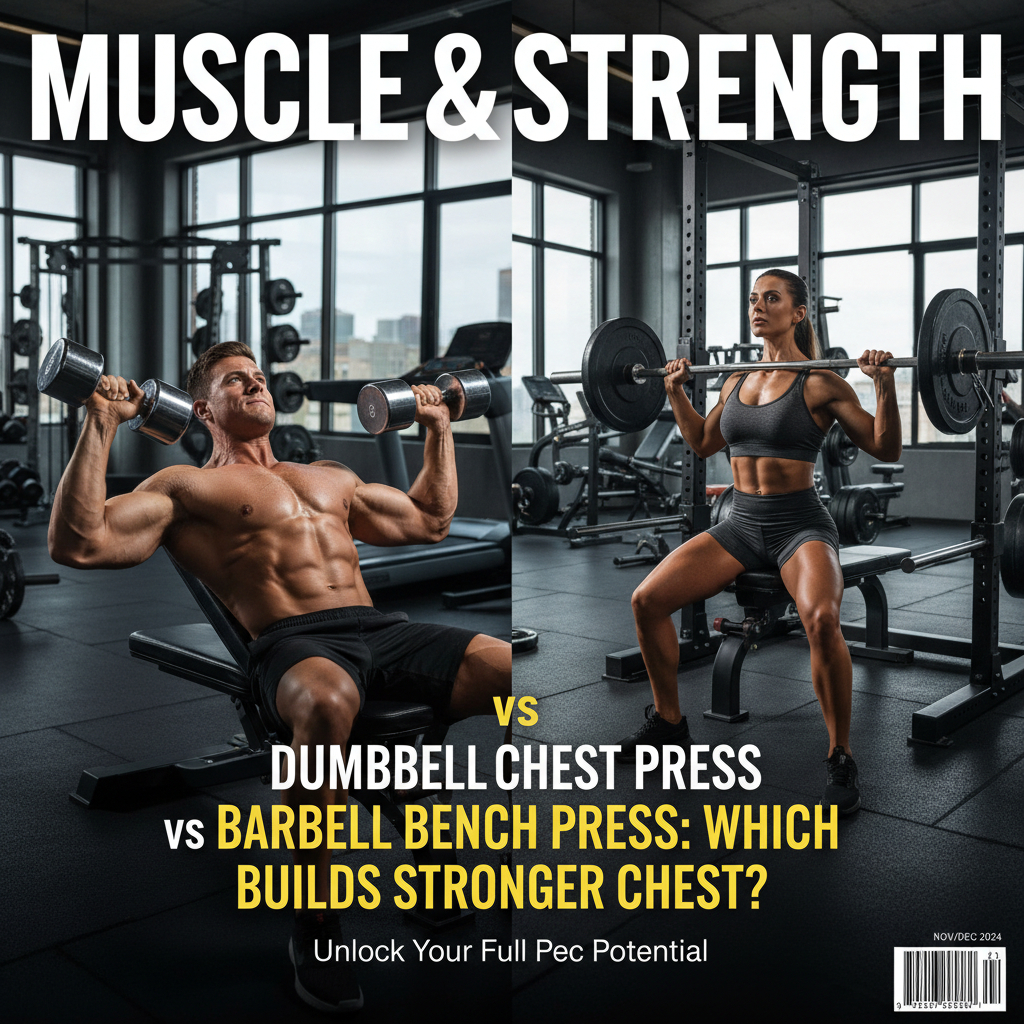
The dumbbell chest press and the barbell bench press both target your chest, shoulders, and triceps. Dumbbells make your muscles on both sides of your body work separately. This helps fix muscle imbalances and can create more even muscle growth. The barbell lets you push heavier weight, which can lead to more strength and bigger muscles over time.
Range of Motion and Joint Impact
Dumbbells allow more movement, so you can lower them below chest level. This extra range can stretch your muscles more. The barbell has a fixed range, often stopping at chest level. Dumbbells may be easier on your wrists and shoulders if you have joint concerns.
Strength Gains and Overload Capacity
A barbell bench press lets you lift heavier because you use both arms together. This is great for building power and overall strength. Dumbbells usually mean lighter weights, making them better for control and isolation.
Safety, Stability, and Injury Risk
Dumbbells force stabilizer muscles to work harder, helping you avoid muscle imbalances. They’re also safer to drop if you get stuck. Barbell bench presses can be risky without a spotter, as you might get trapped under the bar.
How to Perform a Perfect Dumbbell Chest Press
Step-by-Step Dumbbell Chest Press Setup
- Choose a flat bench and two dumbbells of the same weight.
- Sit at the edge of the bench with a dumbbell in each hand, resting on your thighs.
- Lie back slowly, bringing the dumbbells to your chest level.
- Plant your feet flat on the floor and keep your back pressed to the bench.
Proper Form and Execution Techniques
- Hold the dumbbells just above your chest, palms facing forward.
- Press the weights up, arms straight but elbows slightly bent.
- Lower slowly to the start position, elbows moving out at a 45-degree angle.
- Keep the motion smooth, avoiding jerking movements.
Common Mistakes and How to Correct Them
- Arching your back: Press your lower back to the bench.
- Dropping your elbows too low: Stop when your upper arms are level with the bench.
- Moving your feet: Keep them planted for balance.
- Using too much weight: Start light and increase slowly.
Pro Tips for Progressive Overload with Dumbbells
- Add small weight increases each week.
- Try more sets or reps as you get stronger.
- Change your grip angle to work your muscles differently.
How to Master the Barbell Bench Press Safely
Setting Up for the Barbell Bench Press
- Set a flat bench under a barbell rack.
- Load the barbell with plates that suit your strength level.
- Lie under the bar so your eyes are right below it.
- Plant your feet flat; grip the bar just wider than shoulder width.
Correct Form and Execution Strategies
- Unrack the bar and hold straight above your chest.
- Lower the bar to mid-chest, not your neck or stomach.
- Keep elbows at about a 75-degree angle from your body.
- Push the bar up using chest and triceps until arms are straight.
Benching Mistakes to Avoid
- Bouncing the bar: Lower the bar with control, do not bounce it off your chest.
- Lifting your feet: Keep them on the floor for stability.
- Holding your breath: Breathe in on the way down, breathe out on the way up.
Using Spotters and Safety Equipment
- Always have a spotter if you lift heavy.
- Use safety bars or a power rack if you train alone.
- Start with light weights until your form is perfect.
Decision Framework: Which Press Is Right for You?
Matching Exercises to Personal Fitness Goals
- Hypertrophy (muscle growth): Dumbbells for more stretch, barbell for heavier lifts.
- Strength: Focus on barbell bench press for maximum weight.
- Rehab: Start with dumbbells for safer joint movement.
Considerations for Beginners, Intermediates, and Advanced Lifters
- Beginners: Both are good, but dumbbells help learn balance.
- Intermediates: Mix both for balanced development.
- Advanced: Use variations and heavier loads to keep growing.
Home Gym vs Commercial Gym: Equipment Availability
- Home: Dumbbells need less space and equipment.
- Commercial: Most gyms have benches, barbells, and dumbbells for all options.
Special Populations (Shoulder Injuries, Mobility Limitations)
- Dumbbells allow flexible hand positions for sore shoulders.
- Barbell may need special setup for limited mobility.
- Stop if you feel pain and talk to a professional for guidance.
Programming Both Exercises Into Your Routine
Weekly and Monthly Training Templates
| Week | Dumbbell Chest Press | Barbell Bench Press |
|---|---|---|
| Week 1-2 | 2x per week, 3 sets of 10 reps | 1x per week, 4 sets of 8 reps |
| Week 3-4 | 1x per week, 4 sets of 8 reps | 2x per week, 3 sets of 10 reps |
Progression Strategies and Deloading
- Add weights or reps every week if you can.
- Take a “deload” week every 4-6 weeks—use lighter weights and fewer reps to recover.
Integrating Accessory Movements for Chest Growth
- Add push-ups, chest flyes, and dips for better chest muscle gains.
Warm-Up and Mobility Prep for Chest Pressing
Dynamic Mobility Drills for Chest, Shoulders, and Triceps
- Arm circles: 20 forward, 20 backward.
- Shoulder swings: Cross arms in front, 20 reps.
- Push-up walkouts: 5 reps.
Activation Exercises for Injury Prevention
- Band pull-aparts: 2 sets of 15 reps.
- Scapular push-ups: 2 sets of 10 reps.
Cooldown and Recovery Tips
- Stretch your chest and shoulders after every workout.
- Apply ice to sore areas if needed.
- Get enough sleep and drink plenty of water.
Real-Life Case Studies: Results With Each Press
Bodybuilder Perspective: Maximizing Chest Hypertrophy
Bodybuilders often combine both exercises. Dumbbells help with muscle detail and balance. Barbells increase size and power. Best results come from mixing both weekly.
Powerlifter Perspective: Maximizing Strength
Powerlifters mainly bench press with barbarls to lift heavy weights. They use dumbbells as “accessory lifts” for a stronger, more stable chest.
Average Gym-Goer: Balancing Both for Overall Fitness
If you just want a stronger chest and better health, both exercises work! Alternate them, and use what feels best for your body and goals.
Visual Infographics and How-To Checklists
Side-by-Side Technique Comparison
| Step | Dumbbell Chest Press | Barbell Bench Press |
|---|---|---|
| Setup | Grab two dumbbells, lie on bench | Lie on bench, grip bar just wide of shoulders |
| Start Position | Dumbbells at chest, elbows at 45 degrees | Bar above chest, arms straight |
| Movement | Press both dumbbells up, lower together | Lower bar to chest, press up evenly |
| Finish | Repeat for reps, lower dumbbells to thighs to finish | Rack bar carefully at the end |
Printable Bench Press and Chest Press Checklists
- Warm up with light cardio and dynamic drills.
- Set up with secure grip and correct bench position.
- Keep feet flat and core tight.
- Lower weights under control.
- Use smooth, steady presses up each rep.
- Finish with stretching and hydration.
FAQ: Everything You Need to Know About Dumbbell Chest Press vs Barbell Bench Press
- Q: Which is better for building chest muscle?
A: Both work! Dumbbells for balance and stretch; barbells for power and size. - Q: Is one safer than the other?
A: Dumbbells are safer if you train alone; barbells need a spotter for heavy lifts. - Q: Can beginners do both?
A: Yes. Start with lighter weights, focus on form, and ask for help if needed. - Q: How often should I train chest?
A: 1-2 times per week for most people; adjust based on recovery and goals. - Q: What if I have shoulder pain?
A: Try dumbbells, reduce weight, and check your form. See a doctor if pain continues.
In summary, both the dumbbell chest press and barbell bench press are excellent tools. Choose based on your goals, fitness level, and access to equipment. Always focus on good form and safety first—gains will follow!