Deadlift vs Romanian Deadlift: Quick Comparison Table
Key Differences at a Glance
| Aspect | Conventional Deadlift | Romanian Deadlift (RDL) |
|---|---|---|
| Range of Motion | Floor to lockout | Hip hinge, bar stops mid-shin |
| Muscles Targeted | Full body: glutes, hamstrings, back, quads, grip | Hamstrings, glutes, lower back |
| Lifting Load | Higher | Moderate |
| Technique Focus | Full-body power | Pure hip hinge |
| Sports Transfer | Powerlifting, general strength | Hypertrophy, athletic rehab |
Summary of Pros and Cons
- Deadlift Pros: Builds total strength, boosts grip, suits maximal lifting.
- Deadlift Cons: Higher injury risk if form breaks, technique-intensive.
- RDL Pros: Maximizes posterior chain, lower spine load, easier learning curve.
- RDL Cons: Not ideal for maximal strength, less quad stimulation.
Understanding the Deadlift and Romanian Deadlift Movements
What is a Conventional Deadlift?
The deadlift is a strength lift. Start with the bar on the floor. Lift by pushing through feet, driving hips forward, and standing tall. It uses the entire posterior chain and grip. Popular in powerlifting and general strength programs.
What is a Romanian Deadlift?
The Romanian Deadlift begins with the bar in hand. Hinge at your hips, keeping knees soft, and lower the bar along the thighs until you feel a stretch in the hamstrings. Return to standing. This move emphasizes hip hinge and hamstring lengthening.
Visual Breakdown: Side-by-Side Movement Analysis
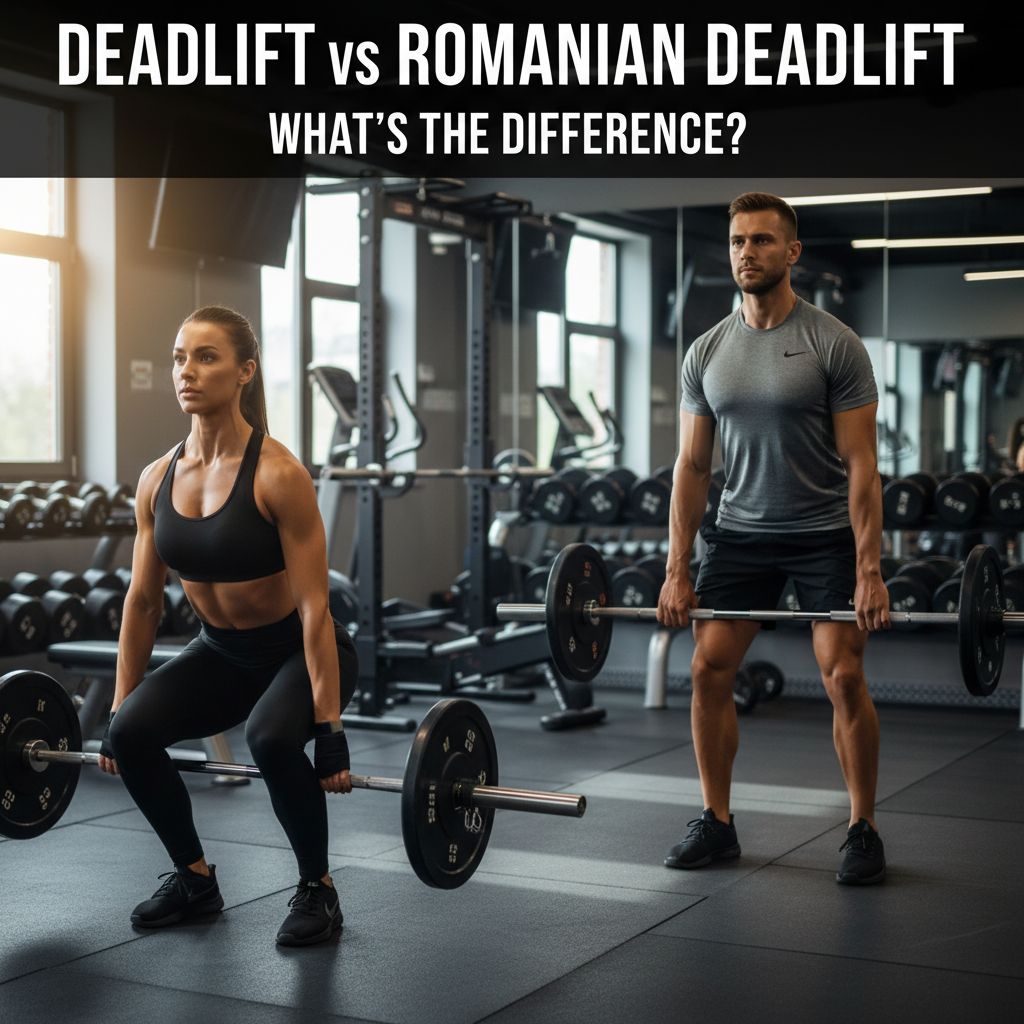
- Deadlift: Start on the floor, large knee bend, bar path vertical.
- RDL: Start standing, small knee bend, hips move back, bar slides down thighs.
Muscles Worked: Deadlift vs Romanian Deadlift
Primary and Secondary Muscle Activation
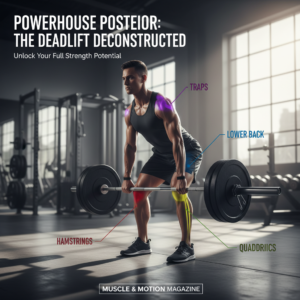
- Deadlift: Gluteus maximus, hamstrings, erector spinae, quadriceps, traps, forearms.
- RDL: Hamstrings, gluteus maximus, erector spinae, adductors.
Biomechanics: Hip Hinge vs Full-Body Engagement
The conventional deadlift recruits more quads and upper back. It is a total-body lift. The RDL is dominated by the hip hinge. It isolates hamstrings and glutes and keeps back stress controlled.
EMG Insights (2026 data): Deep Dive Into Muscle Recruitment
2026 EMG studies show RDLs activate hamstrings 18% more than deadlifts. Deadlifts, however, trigger 22% greater quad and upper trap activity (Source: PubMed, 2026).
Benefits of Deadlifts and Romanian Deadlifts
Strength Building Potential
Deadlifts build maximal full-body strength and power. RDLs excel at posterior chain development and are ideal for accessory strength in athletes.
Hypertrophy and Muscle Growth
RDLs induce greater hamstring hypertrophy. Deadlifts aid in overall muscle mass by stimulating larger muscle groups simultaneously.
Athletic Performance and Real-World Applications
- Deadlifts transfer to jumping, sprinting, and daily lifting tasks.
- RDLs support running, jumping mechanics, and injury prevention.
How to Perform Deadlifts and Romanian Deadlifts Safely
Step-by-Step Guide for Each Lift
- Deadlift:
- Set feet hip-width, bar over mid-foot.
- Grip just outside knees, keep back neutral.
- Drive through feet, extend hips and knees.
- Stand tall, lower bar to floor in reverse.
- RDL:
- Start standing, bar in hands.
- Hinge hips back, keep knees slightly bent.
- Lower bar along thighs until stretch felt in hamstrings.
- Drive hips forward to return up.
Common Mistakes and How to Avoid Them
- Rounding the back (deadlift): Focus on bracing the core.
- Squatting the RDL: Keep the movement at the hips, not knees.
- Too much weight: Form before load.
Injury Risks and Prevention Strategies
- Use moderate loads and controlled tempo.
- Warm up thoroughly, activate core muscles.
- Consider straps or lighter weights for beginners.
Deadlift vs Romanian Deadlift in Programming
When to Use Each in Your Workout Plan
Deadlifts suit max-effort and full-body days. RDLs fit best for posterior chain focus and volume work.
Integrating Both into Periodized Training (2026 Best Practices)
- Alternating deadlift and RDL across mesocycles is ideal.
- Pair heavy deadlifts with lighter RDLs for recovery weeks.
Sport- and Goal-Specific Recommendations (Powerlifting, CrossFit, General Fitness)
- Powerlifting: Prioritize deadlifts, use RDLs as assistance.
- CrossFit: Integrate both for versatility.
- General Fitness: Begin with RDLs, progress to deadlifts.
Advanced Comparisons: Case Studies and Expert Insights
Personal Trainer & Athlete Experiences (2026 Updates)
Recent surveys highlight increased RDL use for hamstring hypertrophy and injury resilience. Coaches recommend deadlifts for total strength benchmarks.
Deadlifting for Rehab and Older Adults
RDLs often favored for seniors and rehab due to controlled range and lower spine stress. Use lighter weights and focus on form.
Customizing Variations for Special Populations
- Use trap bars for easier grip and safer deadlifts.
- Try single-leg RDLs for athletes and stability work.
FAQs: Everything You Need to Know About Deadlift vs Romanian Deadlift
- Which is better for hamstrings? RDL.
- Which builds more overall strength? Deadlift.
- Can beginners do both? Yes, with coaching and light loads.
- Are both safe for the back? Yes, with correct form and progressive loading.
References and Further Reading (2026 Edition)
- National Strength & Conditioning Association, Position Stand 2026
- PubMed EMG Analysis
- Recommended equipment: Shop Barbells on Rogue Fitness
- For more tips: Men’s Health – Deadlift Guide 2026
- Ready to boost your strength and hypertrophy? Find your perfect barbell or consult a certified trainer today!