Quick Overview – Key Differences Between Deadlift vs RDL
Definition & Purpose of Each Lift
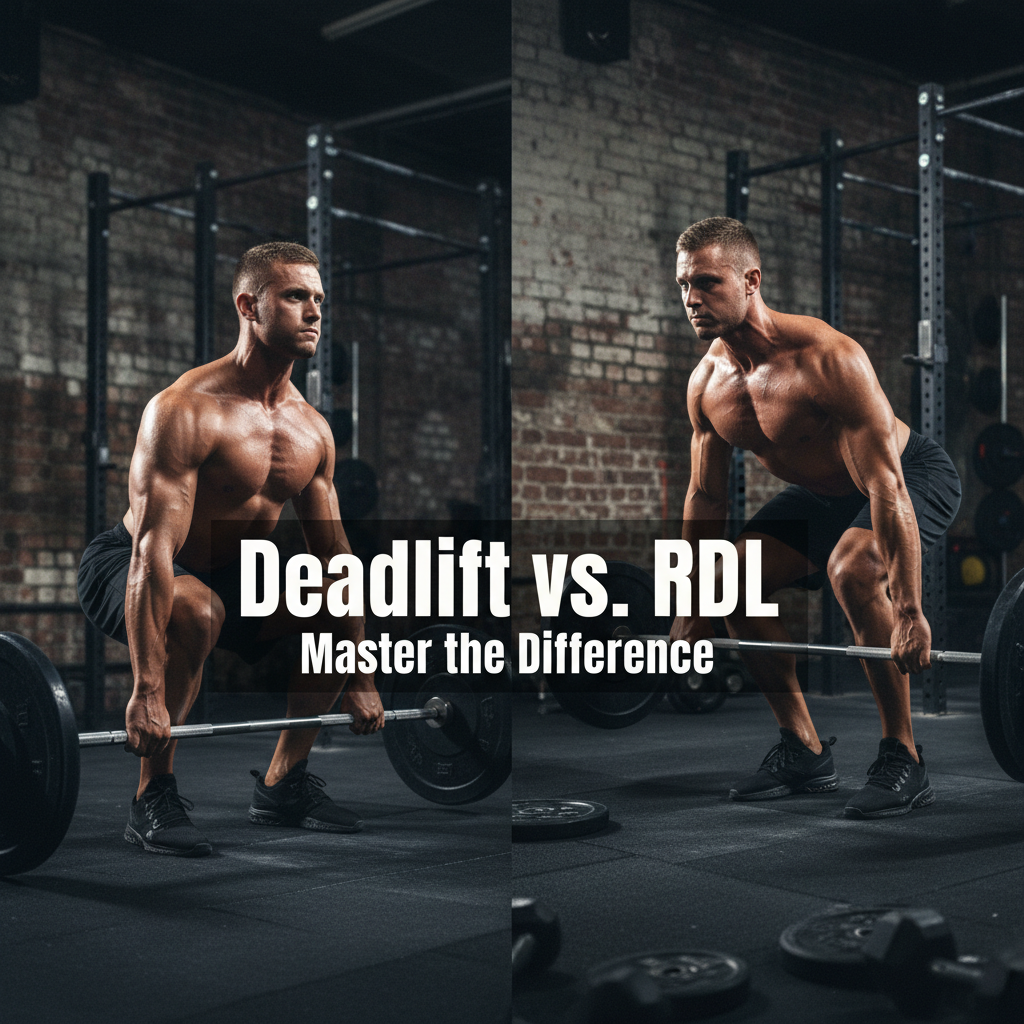
The deadlift and Romanian deadlift (RDL) are foundational lifts in strength training. The deadlift is a hip-hinge movement that begins from the floor, focusing on lifting heavy loads and balanced lower body development. The RDL emphasizes the eccentric (lengthening) phase, typically starts from a standing position, and targets the hamstrings and glutes more intensely with lighter weights and greater range of motion.
At-a-Glance Comparison Table (Setup, Muscles Targeted, Application)
| Feature | Deadlift | RDL |
|---|---|---|
| Setup | Barbell on the floor, full stop start | Barbell or dumbbells, start standing |
| Main Muscles | Glutes, hamstrings, quads, lower back | Hamstrings, glutes, lower back (less quad) |
| Application | Strength, power, total-body development | Hypertrophy, hamstring strength, mobility |
Deadlift vs RDL – Step-by-Step Technique Guide
Conventional Deadlift: Proper Form & Common Mistakes
Start with feet hip-width apart, barbell over midfoot. Grip shoulder-width. Keep spine neutral, chest up, engage lats. Drive through legs, locking hips and knees simultaneously. Lower with control. Common mistakes: rounded back, hips rising too fast, jerking the bar.
Romanian Deadlift (RDL): Proper Form & Common Mistakes
Stand upright, slight knee bend, bar in hands. Push hips backward, maintain a strong, flat back. Lower bar along front of thighs to mid-shin or max hamstring stretch. Return to standing by hinging at the hips. Common mistakes: excessive knee bend, losing back tension, rounding shoulders.
Pro Coaching Cues for Each Lift
- Deadlift: “Drive legs into the floor” – “Pull slack out of the bar” – “Chest proud, lats tight”
- RDL: “Reach hips back” – “Keep bar close” – “Feel the stretch, not the pain”
Muscles Worked: Deadlift vs RDL Science
Detailed Muscle Activation Chart
| Muscle Group | Deadlift (% EMG) | RDL (% EMG) |
|---|---|---|
| Hamstrings | 60 | 85 |
| Glutes | 75 | 85 |
| Lower Back | 85 | 80 |
| Quads | 80 | 35 |
Data source: EMG analyses, peer-reviewed studies (2024–2025)
Explaining Eccentric (RDL) vs Concentric (Deadlift) Emphasis
The RDL focuses on the eccentric lowering, maximizing muscle lengthening and time-under-tension. Conventional deadlift is more balanced but maximizes force in the concentric (lifting) phase.
How Load & Range of Motion Affect Gains
Deadlifts allow for heavier loads, ideal for overall strength. RDLs use less weight but increased range, optimizing muscle growth and flexibility. Combining both can maximize strength and hypertrophy.
Injury Prevention & Safety Tips for Deadlift vs RDL
How to Avoid Common Deadlifting Injuries
- Maintain neutral spine
- Engage core and lats
- Start with light loads to master technique
- Avoid excessive fatigue
RDL – Lower Back Protection & Mobility Integration
Tighten core, keep back straight, and avoid excessive depth if flexibility is limited. Integrate hamstring and hip mobility drills pre-lift.
Warm-Up Protocols & Mobility Drills
- Dynamic leg swings (10 reps per side)
- Hip airplanes (8 reps)
- Glute bridges (12 reps)
- Bodyweight hinge movements
Program Design: How to Integrate Deadlift and RDL for Maximum Results
When to Prioritize Deadlift vs RDL in Your Training Plan
Prioritize deadlifts for maximum strength and power. Use RDLs for targeted hamstring development, accessory hypertrophy work, and injury prevention.
Sample Weekly Templates for Strength, Hypertrophy, and Athletic Performance
- Strength: Deadlift (1–2x/week), RDL (1x/week as accessory)
- Hypertrophy: RDL focus (2x/week), Deadlift (1x/week lightly)
- Athletic: Mix both, lower fatigue, pair with plyometrics
Progression Strategies for Beginners, Intermediates, and Advanced Lifters
- Beginners: Master technique, progress 5–10% per week
- Intermediates: Add volume, alternate RDL and deadlift intensity
- Advanced: Use advanced periodization, add variations, increase rep/set scheme
Deadlift vs RDL for Specific Goals & Populations
Best Applications for Athletes/Sports (e.g., sprinters, powerlifters)
- Powerlifters: Prioritize deadlifts, RDL for lockout and stability
- Sprinters: RDL for hamstring strength and injury prevention
- General athletes: Combine both for balanced posterior chain strength
Choosing the Right Lift for Hypertrophy, Strength, or Rehab
- Hypertrophy: RDL for hamstrings/glutes
- Strength: Deadlift
- Rehab: RDL with lighter loads, strict form
Equipment Variations: Barbell, Dumbbell, Trap Bar, Resistance Bands
- Barbell: Maximal strength potential
- Dumbbell: Better for beginners or single-leg work
- Trap Bar: Easier on the lower back, more quad engagement
- Bands: Adjustable resistance, rehab and mobility
Real-Life Examples & Video Demonstration Recommendations
Visual Guides – Infographic or Video Suggestions for Each Movement
Before & After Case Studies (Client/Trainer Stories)
- Client: Improved 1-rep max from 120kg to 170kg in 12 months using split focus
- Trainer: Reduced hamstring strains in team athletes by 40% after integrating RDLs
Deadlift vs RDL FAQ: Troubleshooting Technique & Plateaus
“Which Is Harder?” & Comparative Strength Standards (2026 Update)
Most lifters deadlift 20–40% heavier than their RDL, due to starting from the ground and greater muscle recruitment. RDLs are more technically demanding in movement control.
How to Fix Lockout, Grip, or Hamstring Weakness
- Lockout: Hip thrusts, rack pulls
- Grip: Farmer’s carry, fat grip work
- Hamstring: Nordic curls, Romanian deadlift variations
Common Misconceptions & Myths
- “Deadlifts always hurt your back” – with proper form, they are safe and effective
- “RDL is just a lighter deadlift” – it targets muscle and technique differently
- “You must choose one” – combining both can enhance results
References & Further Reading (2026 Edition)
- Deadlift EMG study (2024)
- Stronger by Science: Deadlift vs RDL
- Strength & Conditioning Journal – Hip Hinge Mechanics
- Shop recommended equipment:
- Take Action: Download a free lifting template, watch technique videos, and choose the right equipment for your needs. For custom coaching, contact our team.