Why Hamstring Flexibility Matters in 2026 Fitness Trends
The Science Behind Hamstring Tightness
Hamstring tightness is a leading contributor to lower back pain and sports injuries. Research published in 2024 shows that hamstring stretching can reduce low back pain intensity (SMD = -0.72, 95% CI: -1.35 to -0.09) and improve flexibility, specifically in individuals with radiating pain (SMD = 2.39, 95% CI: 1.76–3.02; n=735, 225 participants). Recent breakthroughs confirm that both static and post-isometric relaxation (PIR) techniques reduce muscle stiffness, but PIR yields superior and faster results in sedentary populations.
Benefits of Stretching for Strength, Mobility, and Desk Life
Consistent hamstring stretching—3–5 weekly sessions—improves muscle range of motion, stride efficiency, and posture. For desk workers, regular stretching alleviates tightness associated with prolonged sitting. A 2024 meta-analysis demonstrates a 20–33% decrease in reported stiffness and increases in active knee extension (post-SS: 42.6° ±4.8°; post-PIR: 36.3° ±6.5°).
Who Needs Hamstring Stretches: Athletes, Runners, Office Workers & More
Hamstring stretching is crucial for:
- Athletes & Runners: Reduces injury risk by up to 50% and improves acceleration mechanics.
- Desk Workers: Decreases chronic tightness and mitigates lower back discomfort.
- Older Adults: Preserves mobility and balance, reducing falls.
- Rehabilitation Patients: Improves mobility after injury or surgery.
Quick Picks – Top 3 Best Hamstring Stretches for Immediate Relief
Best Overall: Standing Hamstring Stretch
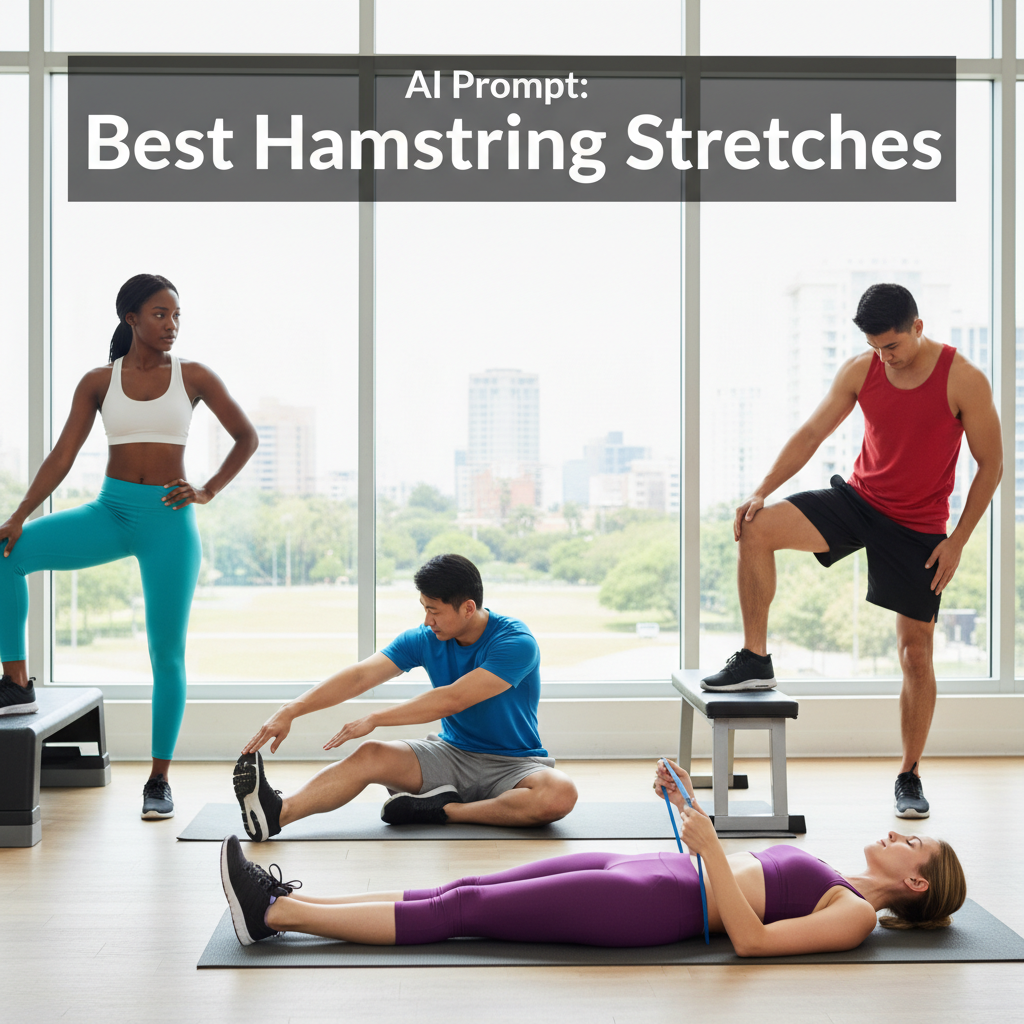
Step forward with one foot, hinge at the hips, and lean over your straight front leg. Hold for 40–60 seconds per side. Evidence shows a marked improvement in flexibility and relief of tightness in both active and sedentary populations.
Best for Beginners: Seated Forward Fold
Sit with legs extended, hinge at the hips, and reach toward your toes. Hold for 30–60 seconds. This stretch is beneficial for both beginners and those with limited flexibility, facilitating gradual range of motion improvements.
Best for Athletes: Dynamic Leg Swing
Stand at a wall for balance. Swing one leg forward and back in a controlled manner, 10–15 repetitions per side. This dynamic movement prepares the hamstrings for explosive activity and reduces strain rates during acceleration.
The Complete List: 12 Best Hamstring Stretches for Every Fitness Level
-
Standing Hamstring Stretch
Great for immediate relief and daily mobility.
-
Seated Forward Fold
Improves flexibility and is accessible to all levels.
-
Supine Hamstring Stretch with Band
Lie back, loop a strap around your foot, straighten the leg toward the ceiling, and gently pull. Hold for 15–30 seconds. Especially effective post-injury due to controlled intensity.
-
Downward Dog (Yoga)
Push back into an inverted V-shape, pressing heels toward the ground. Engages hamstrings, calves, and back.
-
Single-Leg Romanian Deadlift Stretch
Perform an RDL with no weight, focusing on hip hinging and hamstring stretch. Supports balance and functional strength.
-
Happy Baby Pose (Yoga)
Lie on your back, grab the outer edges of your feet, draw knees toward armpits. Provides a gentle stretch, ideal for end of sessions.
-
Dynamic High Kick
March forward, kicking the straight leg up to hip height. Repeat 10–12 times per side. Builds mobility and warms up for sport.
-
Jefferson Curl
Stand, slowly roll down with weights or bodyweight, keeping knees straight. Focuses on spinal and hamstring mobility with controlled movement progression.
-
Wide-Leg Forward Fold
Stand with legs wide, hinge at hips, and reach toward the floor. Stretches both hamstrings and adductors.
-
Foam Rolling for Hamstrings
Roll backs of thighs for 30–60 seconds, pausing on tight spots. Foam rolling can decrease perceived muscle stiffness and aid recovery.
-
Lying Hamstring Stretch
Lie on your back, raise one leg, and gently pull it toward the chest. Effective for those with low back pain or limited mobility.
-
Extended Triangle Pose
From standing, extend one leg forward and the other back, reach forward and down with a straight torso. Stretches the entire rear chain.
How to Stretch Safely: Pro Tips for Maximum Gains
Proper Warmup Before Hamstring Stretching
Start with light cardiovascular activity (walking, cycling) for 3–5 minutes. This increases muscle temperature, reducing injury risk and improving stretch effectiveness.
Correct Technique: Positioning, Hold Times, and Breathing
- Hold each stretch for 20–60 seconds, repeat 1–3 times per leg.
- Never force or bounce; move to the point of mild tension, not pain.
- Use deep, slow breathing to promote relaxation and muscle lengthening.
- Use straps or towels for support if flexibility is limited.
Avoiding Common Stretching Mistakes and Injuries
- Do not stretch cold muscles—always warm up first.
- Avoid bouncing or ballistic movement in static stretches.
- Progress gradually; overstretching can cause strains.
- Focus on symmetrical improvement to prevent muscular imbalances.
Personalizing Your Hamstring Stretch Routine
Beginner, Intermediate, and Advanced Progressions
- Beginners: Start with static stretches, hold 20–30 seconds, 2–3 times per week.
- Intermediate: Add dynamic movements and hold stretches 40–60 seconds, 3–4 times per week.
- Advanced: Incorporate loaded stretching (Jefferson Curls), dynamic kicks, and mobility drills 4–5 times per week.
Stretching for Runners vs. Weight Lifters vs. Desk Workers
- Runners: Emphasize dynamic and post-run static stretches for optimal stride and recovery.
- Weight Lifters: Focus on pre- and post-lifting static stretches to prevent injuries and improve hip hinge mechanics.
- Desk Workers: Schedule short stretch breaks throughout the day to counteract sitting tightness.
Adjustments for Limited Mobility or Older Adults
- Use straps or bands for support and intensity modification.
- Perform stretches lying down or seated for safety.
- Reduce hold times initially and progress gradually.
Beyond Stretching: Integrating Strength and Mobility for Healthier Hamstrings
Pairing Stretches with Strength Moves (e.g., Glute Bridges, RDLs)
Nordic hamstring exercises have been shown to increase muscle sarcomeres by up to 30%, improving stretch tolerance and reducing injury incidence by up to 50%. Integrate strength moves like glute bridges and Romanian deadlifts for comprehensive hamstring health.
Dynamic vs. Static Stretches: When and Why
- Dynamic stretches (leg swings, high kicks): Pre-workout to activate and warm the muscles.
- Static stretches (seated fold, lying stretch): Post-workout to aid recovery and flexibility.
Using Equipment: Bands, Foam Rollers, and More
- Resistance bands allow deeper stretches and proprioceptive feedback.
- Foam rollers decrease perceived tightness and improve circulation before and after sessions.
- Assistive devices (stretching straps, yoga blocks) are recommended for those with mobility limitations.
Frequently Asked Questions – Hamstring Stretching in 2026
How Often Should I Stretch My Hamstrings?
For best results, stretch 3–5 times per week. Even short daily sessions yield measurable flexibility gains.
What If I Have a Hamstring Strain or Injury?
Do not stretch acutely injured tissue. Once cleared by a medical professional, use gentle, controlled stretching and prioritize pain-free motion.
How Do I Know If My Hamstrings Are Flexible Enough?
If you can reach within 2–3 inches of your toes while seated without excessive effort, your flexibility is considered functional. Assess by monitoring daily activities and discomfort levels.
Can I Stretch Every Day?
Yes. Daily stretching is safe if performed gently and without excessive force. Alternate intensity and volume, and avoid overstretching.
Are There Risks to Overstretching?
Yes. Overstretching can lead to microtears, weakness, and injury. Always progress gradually and respect your body’s limits.
Latest Research: What’s New in Hamstring Health (2026 Update)
New Findings on Stretching and Athletic Performance
Stanford’s 2025 study confirms Nordic hamstring exercises increase fascicle length and add sarcomeres, leading to a 20–30% enhancement in stretch capacity without compromising strength, and reducing strains by 33–50%.
Insights from Physical Therapists and Sports Medicine Experts
Experts now promote a hybrid approach—combining static, dynamic, and eccentric strengthening—as the new gold standard for injury prevention and performance.
Stretching Myths Debunked
- Myth: Passive stretching alone is enough for long-term flexibility.
Fact: Strength and movement-based stretching are required for sustainable improvement. - Myth: Stretching always reduces muscle strength.
Fact: No negative effects on strength if done post-workout or as part of a mobility-focused regimen. - Myth: All stretching methods are equally effective.
Fact: Post-isometric relaxation surpasses static stretching for immediate flexibility in sedentary populations.
Expert-Approved Hamstring Flexibility Routine (With Printable Table)
Sample Weekly Stretches Plan for All Levels
| Day | Warmup (5 min) | Stretch 1 | Stretch 2 | Strength Move | Cool-down |
|---|---|---|---|---|---|
| Monday | Brisk Walk | Standing Stretch (2x40s) | Dynamic Leg Swings (2×15) | Glute Bridges (2×15) | Foam Roll (1 min) |
| Tuesday | Light Bike | Seated Forward Fold (2x40s) | Supine Band Stretch (2x30s) | Single-Leg RDL (2×12) | Happy Baby Pose (1 min) |
| Thursday | Walk Stairs | Wide-Leg Fold (2x30s) | Dynamic High Kicks (2×12) | Loaded Jefferson Curl (2×8) | Foam Roll (1 min) |
| Saturday | Row Machine | Extended Triangle (2x30s) | Lying Hamstring Stretch (2x30s) | Glute Bridges (2×15) | Happy Baby (1 min) |
Tips for Staying Consistent and Tracking Progress
- Print or bookmark your routine.
- Log sessions and note comfort levels after each.
- Set goals for reach, duration, and reduction in tightness.
Visual Guide: Hamstring Stretch Infographics & Step-by-Step Videos
- Step-by-step infographics for each stretch.
- Illustrative icons for target muscles, form, and safety cues.
- Embedded video tutorials for key stretches, available at reputable fitness resources like Runner’s World, Mayo Clinic, and Welltech.
References & Further Reading on Hamstring Flexibility in 2026
- Runner’s World – The Best Hamstring Stretches (2026)
- Welltech – Hamstring Stretches (2026)
- Pliability – How to Fix Tight Hamstrings (2026)
- Mayo Clinic – Stretching Guide (2026)
- Stanford Human Performance – Latest Research (2026)
- SAGE – Hamstring Stretching and Pain Reduction (2024)
- Wiley – Static Stretching Effects (2024)
Ready to unlock your flexibility? Try the expert routine above and track your progress. Need the best equipment? Shop recommended stretch bands and rollers for safer and deeper flexibility!